Georgia Access Fraud and Fake Brokers: What Individuals and Small Businesses Need to Know

Georgia Access fraud can start with a text offering “free health insurance.” The person asks for your date of birth and Social Security number, promises to handle everything, and says you do not need to review an application. Weeks later, you discover a health plan you never chose—or your existing plan has changed. This guide explains how Georgia consumers and small businesses can recognize fake brokers, verify an agent, and respond to unauthorized enrollment or plan changes.
A practical guide for Georgia families, employees, and employers | September 2026
That scenario deserves immediate attention. Georgia Access identifies enrolling a consumer without their knowledge or consent as an example of fraud. A legitimate insurance agent can be valuable, but no one should enroll you, change your plan, or alter your income information without your informed authorization.
This guide explains what to watch for, how to verify a broker, and what to do if you suspect unauthorized activity. If you are new to the marketplace, start with our explanation of Georgia Access versus Obamacare.
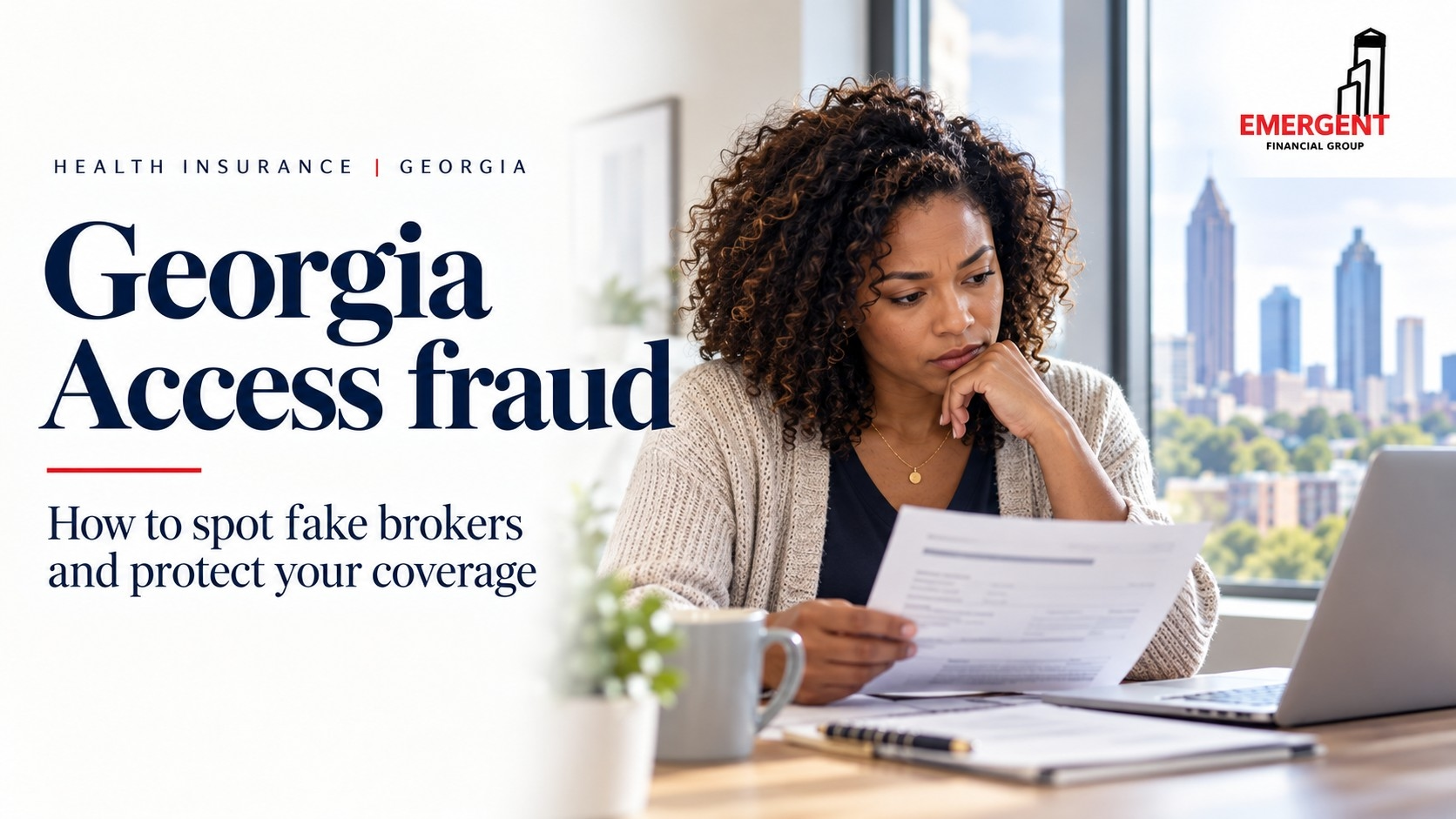
Georgia Access fraud: Real coverage can still be enrolled without consent
“Fake broker” can mean an impostor posing as an agent, an unlicensed salesperson, or a real agent who makes changes without permission. The resulting insurance card may belong to a real insurer. That does not establish that you authorized the application, selected the plan, or supplied the income figures.
The issue has a documented national history. In October 2024, the Centers for Medicare & Medicaid Services (CMS) reported complaints of unauthorized enrollments and plan switches in the federally facilitated Marketplace. More recently, CMS reported on September 22, 2026 that it had canceled approximately 315,000 enrollments covering more than 760,000 people on August 31 after CMS and insurers confirmed the enrollments were unauthorized. CMS expected approximately $2.2 billion in advance premium tax credit payments to be returned. These are federal-platform figures, not Georgia Access case counts. They should not be taken to mean that every affected consumer or agent committed fraud. Georgia Access operates its own state marketplace and publishes Georgia-specific fraud reporting guidance.
Georgia Access fraud can cause concrete problems for a consumer: unexpected premium bills, a change in doctors or covered prescriptions, a possible gap in coverage, or inaccurate advance premium tax credits. Our article on why the cheapest Georgia Access plan can cost more explains why a low advertised premium alone is a poor basis for choosing a plan.
How can unauthorized enrollment happen, and why?
Misconduct may involve an impostor claiming to be a broker, a person without the right license or marketplace certification, or an otherwise legitimate agent acting without authorization. It can take the form of a new policy, a plan switch, a change to the agent of record, or altered income, household, or address information. A person might seek an insurance commission or misuse personal information. Commissions themselves are a normal way legitimate agents are paid; the issue is acting without informed consumer consent. CMS described unauthorized plan and commission-related changes in its federal marketplace, and Georgia Access separately prohibits enrollment without a consumer’s knowledge or consent.
What consent should look like in Georgia
Georgia Access requires agents to document consumer consent before accessing, collecting, using, or disclosing personal information for enrollment assistance. Its rules call for written consent using Georgia Access language; recorded verbal consent is allowed when written consent is not immediately obtainable and must document specific elements, including the assisting agent’s name and National Producer Number (NPN). See the official consent forms and resources. You should know who is helping, what they are authorized to do, and what plan and information appear on your application.
Seven warning signs
- A stranger promises guaranteed “free” coverage without reviewing your household information. Financial help depends on eligibility; an advertised $0 premium is not a universal entitlement. Even a legitimate $0 net premium can come with deductibles, copayments, coinsurance, and limits on doctors or prescriptions.
- Someone asks for your Social Security number, login code, or account password through an unsolicited call, text, or social-media message. End the conversation and contact Georgia Access using a number you looked up yourself.
- You are told to report income or household members inaccurately to qualify for a larger subsidy. Do not sign or submit information you know is false.
- An agent refuses to give a full name, agency name, or license details. Verify the individual and agency through the Georgia insurance license lookup and search for a Georgia Access certified agent.
- You are pressured to approve an application or plan switch you have not reviewed. Ask for the plan name, carrier, monthly premium, effective date, doctors, prescriptions, and a copy of what is being submitted.
- A “broker” requests your first premium through a personal payment app or an unfamiliar link. Verify payment instructions with the insurer. See our Georgia Access premium payment guide and Georgia Access’s official payment instructions.
- You receive an insurance card, enrollment notice, bill, or Form 1095-A for coverage you did not recognize. Investigate promptly; do not assume it is harmless mail.
An unfamiliar name or message is a reason to verify, not proof by itself that a crime occurred. Georgia Access also permits enrollment through certified agents, insurers, and approved web brokers.
Also watch for cash or gift-card offers. CMS warns that social-media advertisements promising rewards may be attempts to obtain personal information. Be cautious if a sales pitch focuses on a giveaway instead of the insurer, exact plan, network, premium, deductible, and out-of-pocket costs.

How to verify help before you enroll
Start at the official site. Type GeorgiaAccess.gov into your browser yourself. Use its Find Local Assistance directory to locate a certified agent or assister. Separately confirm an agent’s Georgia license through the Office of Commissioner of Insurance and Safety Fire (OCI). A license and marketplace certification are distinct checks.
Stay involved in the application. Review household members, projected income, other available coverage, mailing address, phone number, and every selected plan before authorizing submission. Keep copies of the application, eligibility notice, plan confirmation, and your consent records. Use your own account and protect its password and one-time codes.
Review changes later, too. Read Georgia Access and insurer notices. An unexpected carrier, ID card, agent name, premium, or subsidy merits a closer look. A subsidy can change for legitimate reasons, but incorrect application data can also affect monthly premiums and tax reconciliation. Before important care, confirm that coverage is active and that your doctors, hospital, and prescriptions are covered.
Confirm directly with the carrier. After enrollment, verify the plan, effective date, premium, provider network, and first-payment instructions through the insurer’s official website or phone number. For a refresher on tax documents, see our guide to finding your Georgia Access Form 1095-A.

Want to be emailed with the latest health insurance updates?
Sign up now for our Mailing List
What to do if you suspect Georgia Access fraud or an unauthorized plan change
1. Secure and document. Save notices, texts, emails, screenshots, insurance cards, application numbers, and dates. Access your Georgia Access account through its official website and review current and past enrollments. Change your password if account access may have been compromised.
2. Call Georgia Access: 1-888-687-1503. Say clearly: “I believe an enrollment or plan change occurred without my authorization.” Ask the representative to review the application and agent information, explain the correction process, and give you a case or reference number. Ask how to protect your existing coverage while the matter is investigated. Also call the insurer using its published phone number to confirm the policy status and discuss any claims or premium payments.
3. Report suspected misconduct. Georgia Access directs suspected insurance fraud to OCI’s Criminal Investigations Division. OCI provides routes to report suspected fraud and to file a consumer insurance complaint about an agent or insurer. If the issue is an eligibility determination, Georgia Access also explains its separate appeals process. Ask Georgia Access which route fits your case.
4. Address tax records. If a Form 1095-A shows coverage you never authorized, contact Georgia Access about a correction or voided form before relying on the information in a tax return. The IRS explains how incorrect, corrected, and voided Forms 1095-A are handled. Share the documentation with your tax preparer. Our health coverage reporting update provides additional context.
Do not cancel an unfamiliar plan on your own until you understand whether doing so could affect your current coverage, claims, or eligibility. Ask the marketplace and insurer to document the proper correction.
Why employers should pay attention, too
The individual Georgia Access marketplace and an employer-sponsored group plan are different arrangements. Yet a benefits program may connect employees to individual coverage. Under an ICHRA, for example, employees generally select qualifying individual health insurance while the employer establishes a reimbursement arrangement. A misleading enrollment could affect an employee’s network, premium, or reimbursement documentation.
An employer can reduce confusion by naming its authorized benefits contacts, providing written enrollment instructions, directing employees to approved carriers or certified agents, and asking employees to confirm their own plan selections. Ask your benefits advisor who will actually help employees enroll and how that person’s qualifications, consent process, and follow-up will be checked. Employers should avoid collecting employees’ marketplace passwords or making individual plan selections without a clear authorized process. Read our guide to what ICHRA group health insurance means, and compare the structures in our ICHRA vs. QSEHRA vs. SHOP guide and Georgia SHOP tax-credit article. Georgia Access also offers a business agent search and support resources.

Traditional group plans need their own checks
Employees in a traditional employer-sponsored group plan generally are not enrolled through the Georgia Access individual marketplace. Before sharing a census or employee Social Security numbers, however, a business should verify the broker and agency, state insurance licenses, insurer, actual policy documents, and the secure method of sending employee data. Ask whether the proposal is comprehensive group coverage or a limited-benefit or discount product with different terms. Review the deductible, network, exclusions, and employer and employee contributions. The same care applies when comparing level-funded group health insurance or SHOP.
For a company comparing renewal alternatives, our 2027 Georgia group health insurance renewal stress test can help frame the decision. An unauthorized individual-marketplace enrollment does not, by itself, mean the employer’s group plan was changed. Confirm each employee’s situation separately.
Get help reviewing your coverage
If you are an individual who wants to understand your Georgia Access options—or a Georgia employer evaluating group insurance, SHOP, or an ICHRA—contact Emergent Financial Group or email connect@emergentfingrp.com. We can help you review the coverage and identify the right official channels for an enrollment concern. For suspected fraud or an unauthorized change, contact Georgia Access and OCI directly using the links above.
Need help getting started? Explore how Emergent Financial Group partners with Business Owners and Decision Makers to bring you flexible, tax-efficient benefits tailored to your workforce.
Please don’t hesitate to contact us here: connect@emergentfingrp.com.
Frequently asked questions
Is every outside website a scam? No. Georgia Access recognizes approved web brokers and certified agents. Verify the organization through official Georgia Access resources before sharing personal information.
Can a real licensed broker commit misconduct? Yes. Licensing alone does not prove a particular application or change was authorized. Review the transaction and report suspected misconduct through official channels.
Will I automatically lose coverage if I report an unauthorized enrollment? The remedy depends on the facts. Ask Georgia Access and the insurer to explain available corrections, dates, premiums, and claims before taking action.
Can my employer fix my individual marketplace application? Your employer or benefits consultant may help you identify the issue, but the enrollment and correction must be handled through the appropriate marketplace and insurer processes with your involvement.
Should fraud concerns keep me from using an agent? No. A qualified agent can help compare premiums, subsidies, networks, prescriptions, deductibles, out-of-pocket maximums, and plan rules. For employers, the review may also cover group insurance, ICHRA, QSEHRA, SHOP, and other benefits. Verify the professional and remain involved in decisions.
Educational information only. Plan availability, financial assistance, and correction options depend on the facts of each case. Consult your insurer, Georgia Access, and a qualified tax professional as appropriate.
"Helping Businesses Build Better Benefits. Helping Employees Build Better Retirements. RIA in Buckhead. Benefit Planning. Wealth Management. Wills. Trusts. Estate Planning."