GA Access vs Obamacare: What’s the Difference?

If you’ve searched for health insurance in Georgia recently, you’ve probably heard both GA Access and Obamacare used interchangeably.
However, they are not exactly the same thing.
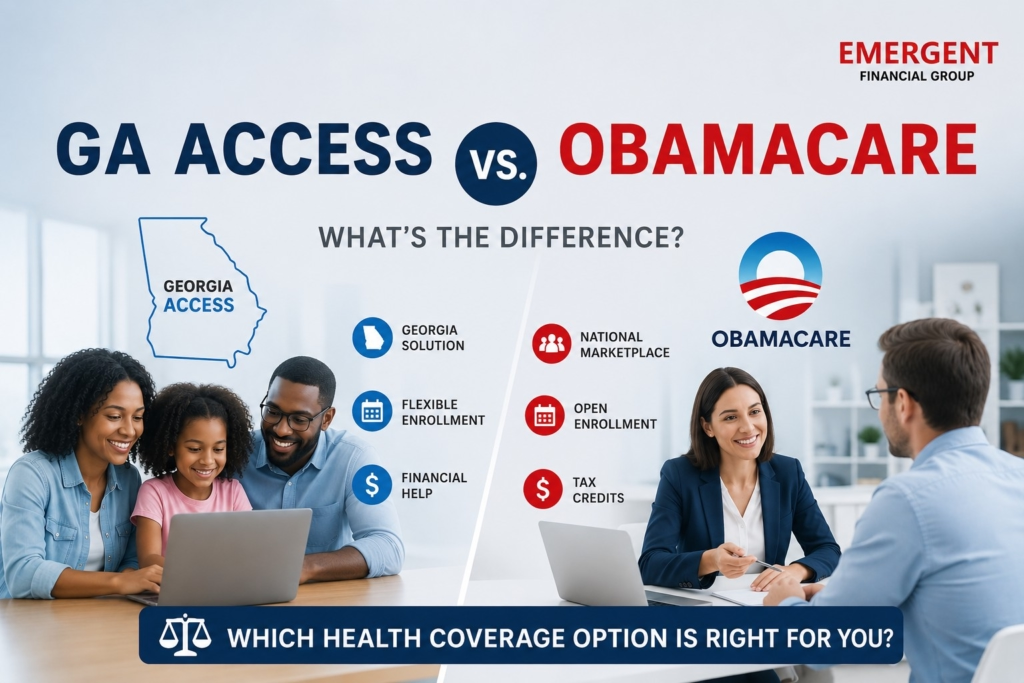
For Georgia families, employees, and employers, understanding the distinction can help you avoid enrollment mistakes, maximize tax credits, and determine whether an individual marketplace plan or employer-sponsored health insurance is a better fit.
At Emergent Financial Group, many Georgia business owners ask:
“Did Obamacare disappear?”
“Is GA Access replacing ACA?”
“Can my employees use GA Access?”
“Should my business use SHOP or an Individual Coverage HRA (ICHRA)?”
The answer requires understanding how the healthcare system evolved.
What Is Obamacare?
Obamacare is the common name for the Affordable Care Act (ACA), a federal law enacted in 2010.
The ACA created:
- Individual health insurance marketplaces
- Premium tax credits
- Cost-sharing reductions
- Guaranteed issue coverage
- Essential health benefits
- Annual Open Enrollment periods
- Special Enrollment Periods (SEPs)
Obamacare still exists today.
Georgia simply changed how residents access it.
Read more:
👉 2026 Health Coverage Reporting Updates for Georgia Access Clients
What Is GA Access?
Georgia Access is Georgia’s official state-based health insurance marketplace.
Beginning November 1, 2024, Georgia transitioned away from using Healthcare.gov directly and created its own enrollment platform.
Think of it this way:
Obamacare = Federal law
GA Access = Georgia’s enrollment website that administers Obamacare plans in Georgia
The ACA rules remain largely the same.
Georgia simply controls its own enrollment experience.

Read more:
👉 How One Small Business Owner Cut Her Healthcare Costs by 20% with ICHRA
GA Access vs Obamacare: Quick Comparison
| Feature | Obamacare (ACA) | GA Access |
|---|---|---|
| What is it? | Federal healthcare law | Georgia’s state-run marketplace |
| Website | Healthcare.gov (previously) | GeorgiaAccess.gov |
| Tax credits | Yes | Yes |
| Open Enrollment | Yes | Yes |
| Special Enrollment Periods | Yes | Yes |
| Health plans | ACA-compliant plans | ACA-compliant plans |
| Available in Georgia? | Yes | Yes |
| Who runs it? | Federal government | State of Georgia |
Georgia residents no longer primarily enroll through Healthcare.gov. Georgia Access is now the official portal.
How GA Access Works
Families and individuals can:
- Create an account
- Estimate eligibility
- Compare plans
- Apply tax credits
- Enroll directly online
Consumers may also enroll through:
- Certified agents
- Web brokers
- Insurance carriers
- Georgia Access consumer portal
Regardless of enrollment method, eligibility and financial assistance remain the same.
How GA Access Tax Credits Work
GA Access uses federal Premium Tax Credits (PTC) and Advanced Premium Tax Credits (APTC).
Your subsidy is based on:
- Household size
- Modified Adjusted Gross Income (MAGI)
- Federal Poverty Level (FPL)
- County of residence
- Cost of the Second Lowest Cost Silver Plan (SLCSP)
You can:
- Use all of the tax credit
- Use part of the tax credit
- Decline it entirely and claim it later on your tax return
Important: If your income estimate is too low and you receive excess tax credits, you may need to repay some of the subsidy when filing taxes.
Helpful external resources:

GA Access Open Enrollment Period
Open Enrollment generally occurs annually.
For Plan Year 2026:
- Opens: November 1, 2025
- Ends: January 15, 2026
Outside of Open Enrollment, consumers need a Special Enrollment Period.
Read more:
👉 How to Set a Strategic Employee Benefits Budget for Your Business
Special Enrollment Periods (SEPs)
SEPs allow enrollment outside Open Enrollment when certain life events occur.
Most SEPs provide a 60-day enrollment window.
Common Qualifying Life Events
Household Changes
✅ Marriage
✅ Birth of a child
✅ Adoption
✅ Court-appointed dependent
✅ Divorce (if coverage is lost)
Loss of Coverage
✅ Job loss
✅ Employer coverage termination
✅ COBRA expiration
✅ Medicaid loss
Residence Changes
✅ Moving to Georgia
✅ Moving counties
✅ Moving ZIP codes
Eligibility Changes
✅ Becoming a U.S. citizen
✅ Refugee status
✅ Release from incarceration
Certain events require proof of prior coverage.
Learn more:
How GA Access Helps Families
GA Access is ideal for:
Self-employed individuals
- Consultants
- Realtors
- Freelancers
- Gig workers

Early retirees
Before Medicare eligibility
Families without employer benefits

Ready to invest?
Grow your financial portfolio
with our expert guidance
Parents can often qualify for subsidies that dramatically reduce premiums.
Employees whose employer coverage is unaffordable
In certain circumstances, employees may qualify for marketplace subsidies if employer coverage fails affordability tests.
Read more:
👉 How to Pay Health Insurance Premiums GA Access
How GA Access Helps Employees
Employees may use GA Access when:
- They lose employer coverage
- Their employer doesn’t offer benefits
- They work part-time
- They are contractors
- They receive an ICHRA reimbursement
Employees should compare:

Option 1
Traditional employer group plan
Option 2
Employer-sponsored ICHRA + GA Access plan
This strategy often gives employees:
- More carrier choices
- More provider choices
- Portable coverage if they change jobs
How GA Access Helps Employers
Employers increasingly use GA Access alongside:
Individual Coverage Health Reimbursement Arrangements (ICHRA)
Instead of buying one group policy, employers reimburse employees for individual marketplace plans.
Benefits include:
- Budget predictability
- Employee choice
- Potential cost savings
- Improved portability
Helpful external resources:
What Is SHOP?
SHOP = Small Business Health Options Program
SHOP was created under the ACA for small businesses.
It allows eligible employers to purchase group health insurance.
Historically:
- Businesses with fewer than 50 employees commonly used SHOP
- Employers could potentially qualify for small business tax credits
- Participation requirements applied
SHOP has seen declining adoption nationwide as newer strategies emerged.

Many Georgia employers now evaluate:
- Traditional group insurance
- ICHRA
- Level-funded plans
- Self-funded arrangements
Read more:
👉 Best ICHRA vs. Group Plan Comparison
What Was FFM?
FFM = Federally Facilitated Marketplace
Before Georgia Access, Georgia used the FFM.
FFM simply means:
Healthcare.gov operated enrollment for Georgia residents.
The federal government managed:
- Enrollment
- Eligibility determinations
- Marketplace administration
Georgia Access replaced FFM administration while keeping ACA protections intact.
SHOP vs GA Access
| Feature | SHOP | GA Access |
|---|---|---|
| Who uses it? | Employers | Individuals & families |
| Coverage type | Group health insurance | Individual health insurance |
| Tax credits | Employer credits | Individual tax credits |
| Employee choice | Limited | Extensive |
| Portability | Employer-dependent | Employee-owned |
| Growing popularity | Moderate | High |
Should Georgia Employers Still Offer Group Health Insurance?
Not necessarily.
Small businesses should evaluate:
Traditional Group Health
Best for:
- Larger groups
- Stable demographics
ICHRA + GA Access
Best for:
- 2-25 employee businesses
- Budget-conscious employers
- Diverse workforce needs
Level-Funded Plans
Best for:
- Healthy employee populations
- Groups seeking long-term savings
If you’re wondering what type of healthcare plan your business should choose. Every business is different.
Conclusion: Understanding Your Options Is the First Step Toward Better Coverage
While many Georgians still refer to marketplace health insurance as “Obamacare,” the reality is that Georgia residents now enroll through Georgia Access, the state’s official health insurance marketplace. The Affordable Care Act remains the law that governs eligibility, premium tax credits, Special Enrollment Periods, and consumer protections, while Georgia Access serves as the platform that helps families, employees, and employers access those benefits.
For individuals and families, understanding how tax credits, Open Enrollment periods, and qualifying life events work can mean the difference between securing affordable coverage and missing an important enrollment opportunity. For employees, Georgia Access may provide access to a wider range of plan options than a traditional employer-sponsored health plan. For employers, especially small businesses, understanding the differences between traditional group health insurance, SHOP, ICHRA, and other modern benefit strategies can create opportunities to improve benefits while controlling costs.
The healthcare landscape continues to evolve, and what worked for your family or business a few years ago may not be the best solution today. Whether you’re evaluating marketplace coverage, comparing employer-sponsored options, considering an ICHRA strategy, or simply trying to understand your eligibility for tax credits, taking the time to review your options can lead to significant savings and better coverage.
If you’re a Georgia family, employee, or business owner and would like personalized guidance, Emergent Financial Group can help you compare your options, evaluate available tax credits, and determine whether Georgia Access, traditional group health insurance, SHOP, ICHRA, or another strategy is the right fit for your situation.
Questions about Georgia Access, ACA tax credits, Open Enrollment, or employer-sponsored benefits? Contact Emergent Financial Group today for a personalized review of your health insurance options.
Need help getting started?
Explore how Emergent Financial Group partners with Families and Small Business Owners for comprehensive Benefit and Estate Planning.
Please don’t hesitate to contact us here

"Helping Businesses Build Better Benefits. Helping Employees Build Better Retirements. RIA in Buckhead. Benefit Planning. Wealth Management. Wills. Trusts. Estate Planning."