10 Types of Trusts Every Atlanta Family, Business Owner, and Retiree Should Understand

Trusts are often discussed as though they are only for the ultra-wealthy, but in reality, trusts can help everyday families, retirees, business owners, parents, and professionals protect assets, avoid unnecessary court involvement, reduce taxes, provide for loved ones, and create long-term financial control.
For many families in Atlanta and throughout Georgia, the question is not whether a trust is “good” or “bad.” The better question is:
Which type of trust actually fits your goals?

At Emergent Financial Group, many business owners and retirees are surprised to discover that trusts are not just estate-planning tools. Certain trusts may help with:
- Probate avoidance
- Asset protection
- Special needs planning
- Medicaid planning
- Charitable giving
- Business succession
- Estate tax strategies
- Protecting children from divorce or creditors
- Long-term healthcare planning
- Wealth transfer across generations
Below are 10 major types of trusts and how they are commonly used.
What Is a Trust?
A trust is a legal relationship where one person transfers assets to another person or institution to manage for the benefit of someone else.
Typically, trusts involve three parties:
- Grantor / Settlor – the person creating the trust
- Trustee – the person or institution managing the trust
- Beneficiary – the person receiving the benefit from the trust
Trusts can hold:
- Real estate
- Investment accounts
- Businesses
- Life insurance
- Cash
- Brokerage assets
- Family property
- Private company ownership interests
One important thing to understand is that most trusts fall into one of two broad categories:
- Revocable trusts
- Irrevocable trusts
And they are generally either:
- Living trusts
- Testamentary trusts created at death through a will
1. Revocable Living Trust
The revocable living trust is one of the most common estate-planning tools in America.
Many people use these trusts primarily to avoid probate.

Why Probate Matters
When someone dies owning assets solely in their own name, those assets often must pass through probate court before heirs can receive them. Probate can involve:
- Court filings
- Attorney fees
- Delays
- Public records
- Administrative costs
For families with:
- Real estate
- Investment accounts
- Rental properties
- Closely held businesses
…probate can become time-consuming and expensive.
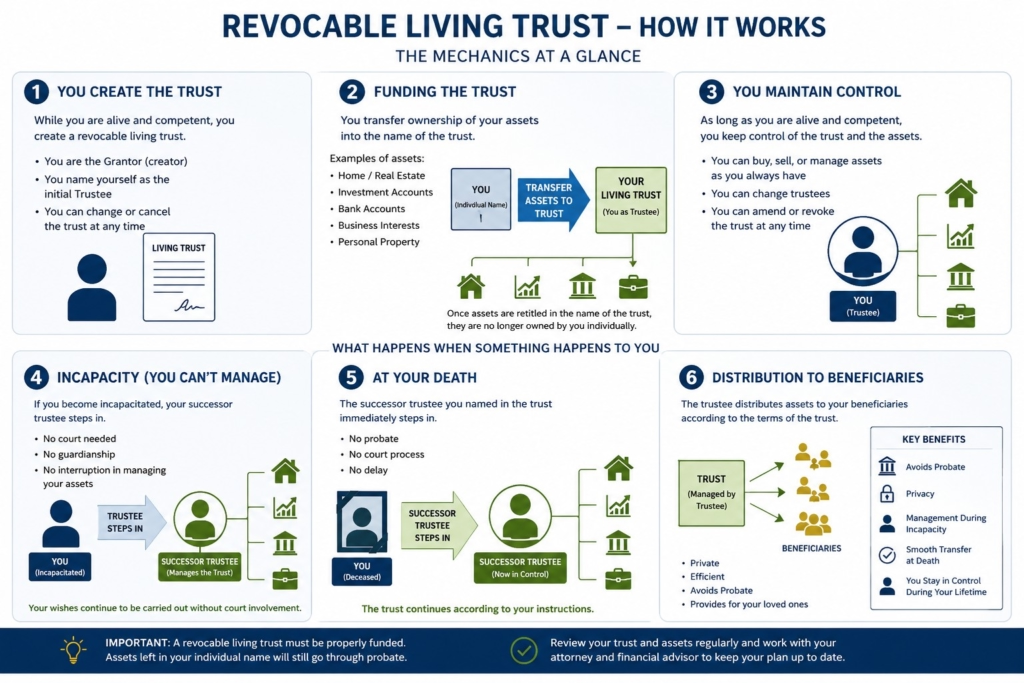
How a Revocable Living Trust Works
With a revocable living trust:
- Assets are transferred into the trust while you are alive
- You usually remain trustee during your lifetime
- You maintain control of your assets
- You can amend or revoke the trust
- A successor trustee takes over upon incapacity or death
This often allows assets to transfer privately and efficiently without court involvement.
Common Uses
- Avoiding probate
- Coordinating estate plans
- Managing incapacity
- Simplifying family wealth transfers
- Holding business interests
2. Trusts for Minor Children
Parents and grandparents frequently use trusts for minors to protect inherited assets for children.
Without trust planning, a court may supervise inherited assets until a child reaches adulthood.
Many parents prefer greater control.
Why Families Use Minor Trusts
Parents may not want:
- An 18-year-old inheriting a large sum outright
- Court supervision over inherited assets
- Assets distributed before children are financially mature
Instead, a trust can:
- Delay distributions
- Provide staged access
- Protect assets from misuse
- Allow trustee discretion
Example Distribution Structure
A trust may provide:
- 1/3 at age 25
- 1/2 of remaining assets at age 30
- Balance at age 35
Or trustees may retain discretion entirely.
This type of planning is especially common for:
- Young families
- Business owners
- Families with investment assets
- Parents concerned about future divorces or creditors
3. Medicaid Trusts
Long-term care costs continue rising across the United States. Nursing home care can easily exceed $10,000–$12,000 per month in some regions.
This has led many retirees to explore Medicaid planning strategies.
What Is a Medicaid Trust?
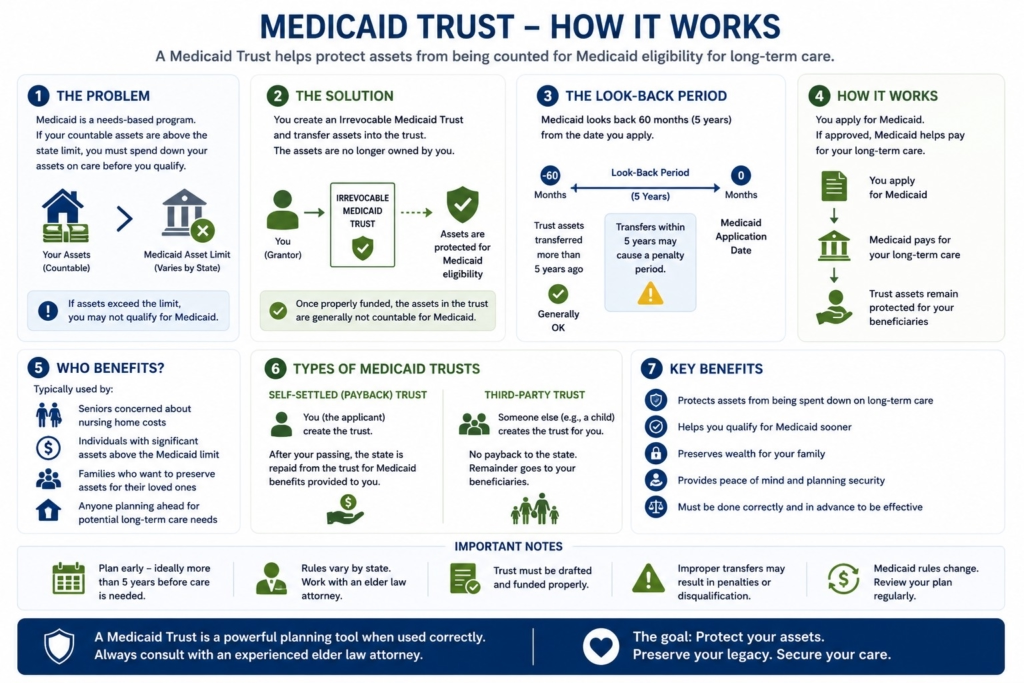
A Medicaid trust is generally an irrevocable trust designed to help protect certain assets from being spent down on long-term care expenses.
These trusts are often used by:
- Retirees
- Aging parents
- Families concerned about nursing home costs
Important Considerations
Medicaid planning rules are extremely technical.

There are:
- Lookback periods
- Transfer penalties
- State-specific rules
- Timing requirements
The transcript specifically references the importance of planning well in advance, ideally more than five years before nursing home care is needed.
Families considering these strategies should work closely with qualified estate-planning and elder-law attorneys.
4. Special Needs Trust
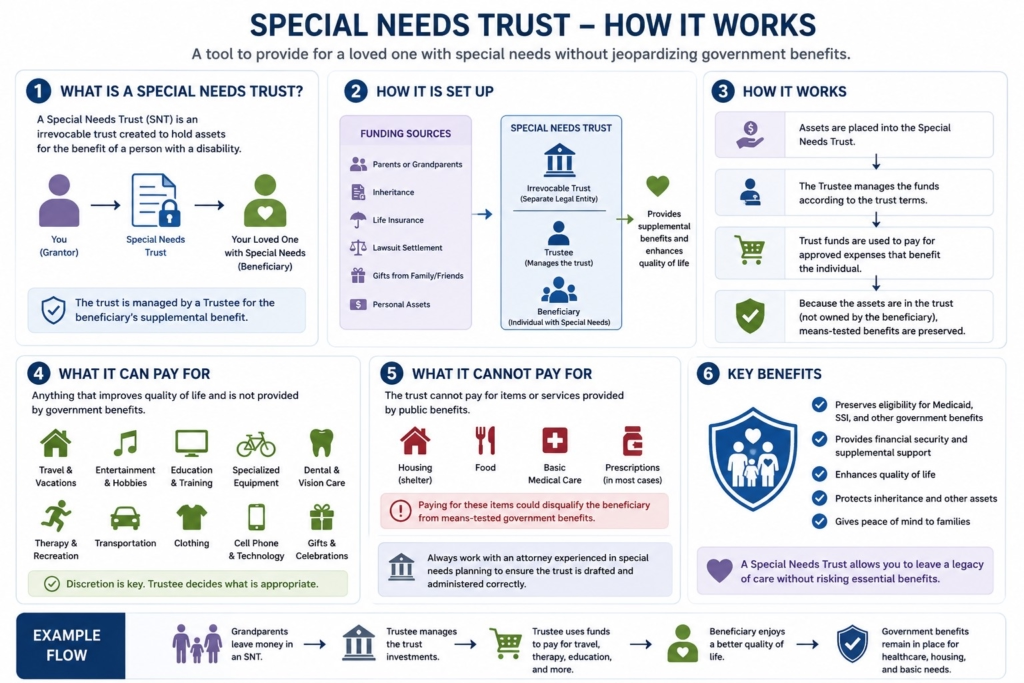
Special needs trusts are designed to benefit individuals with disabilities or special needs while helping preserve eligibility for government assistance programs.
Why These Trusts Matter
Many government programs have strict asset limits.
If a child with special needs inherits assets directly, they may unintentionally lose access to important benefits.
A properly drafted special needs trust may allow:
- Supplemental financial support
- Continued benefit eligibility
- Professional management of inherited assets
- Long-term care coordination
These trusts are commonly used by:
- Parents
- Grandparents
- Siblings
- Caregivers
5. Testamentary Trust
A testamentary trust is created through a last will and testament.
Unlike a living trust, the trust does not exist until the person dies.
How It Works
The will contains the trust instructions.
After death:
- The estate passes through probate
- Assets are transferred into the testamentary trust
- The trustee manages assets according to the instructions in the will
Common Uses
- Trusts for minor children
- Staged inheritance planning
- Asset protection for beneficiaries
- Family control over distributions
Many people mistakenly believe there is a separate trust document. In reality, the trust terms are often fully contained inside the will itself.

6. Spousal Trusts
Spousal trusts are frequently used in blended families, second marriages, and estate-tax planning.
You may also hear names like:
- Credit Shelter Trust
- A/B Trust
- QTIP Trust
Why Spousal Trusts Exist
One concern in estate planning is protecting children from a prior marriage.
A spouse may want to:
- Provide for a surviving spouse
- Ensure remaining assets eventually pass to children
A spousal trust can accomplish both goals.
Example
A husband may leave assets in trust for his wife’s benefit.
The trustee can distribute funds for:
- Health
- Education
- Maintenance
- Support
However, the surviving spouse may not control where the remaining assets go after death.
Instead, those assets may pass to the original spouse’s children or heirs.
7. Irrevocable Life Insurance Trust (ILIT)
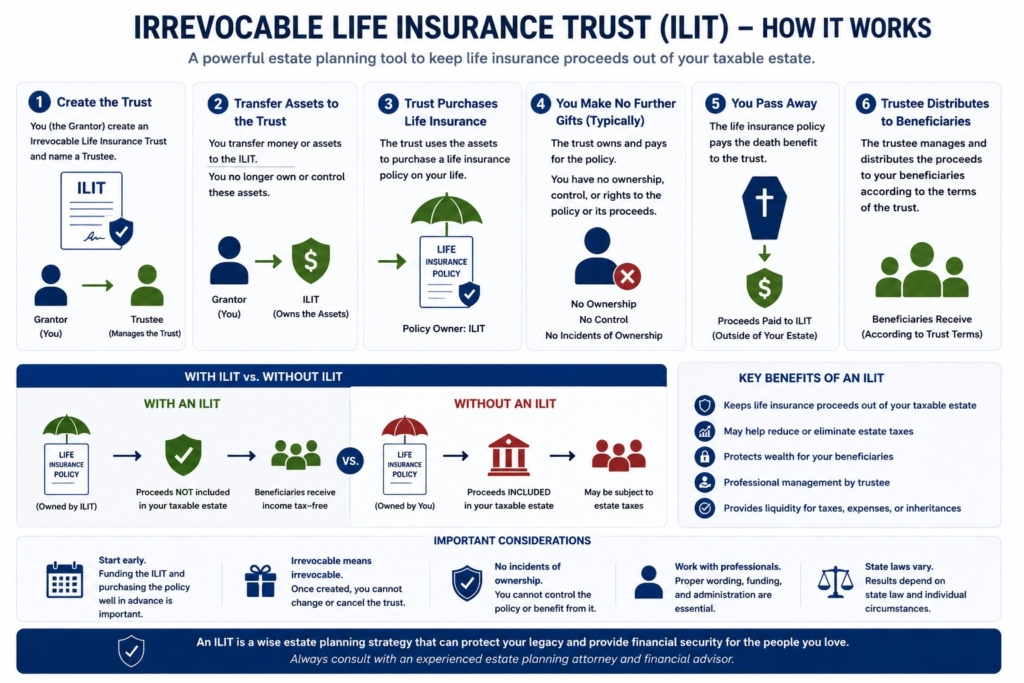
Irrevocable Life Insurance Trusts, often called ILITs, were historically used to reduce estate taxes.
While federal estate-tax exemptions are currently high, these trusts may still matter for:
- High-net-worth families
- Large business owners
- Families with significant real estate
- Multi-generational wealth planning
How an ILIT Works
Parents transfer money into an irrevocable trust.
The trustee uses those funds to purchase life insurance.
We’re focused on the little things
so you can relax.
We create unique financial plans that align your goals with our professional knowledge to create impressive results.
🎉 We enhance the craft of WEALTH MAXING
When the insured dies:
- Insurance proceeds are paid into the trust
- Proceeds may avoid estate inclusion
- Funds may help heirs pay estate taxes or provide liquidity
These trusts are highly technical and should be coordinated carefully with estate-planning counsel.
8. Charitable Trusts
Charitable trusts combine philanthropy with financial and tax planning.
Two common examples include:
- Charitable Remainder Trusts (CRTs)
- Charitable Lead Trusts (CLTs)
Charitable Remainder Trust (CRT)
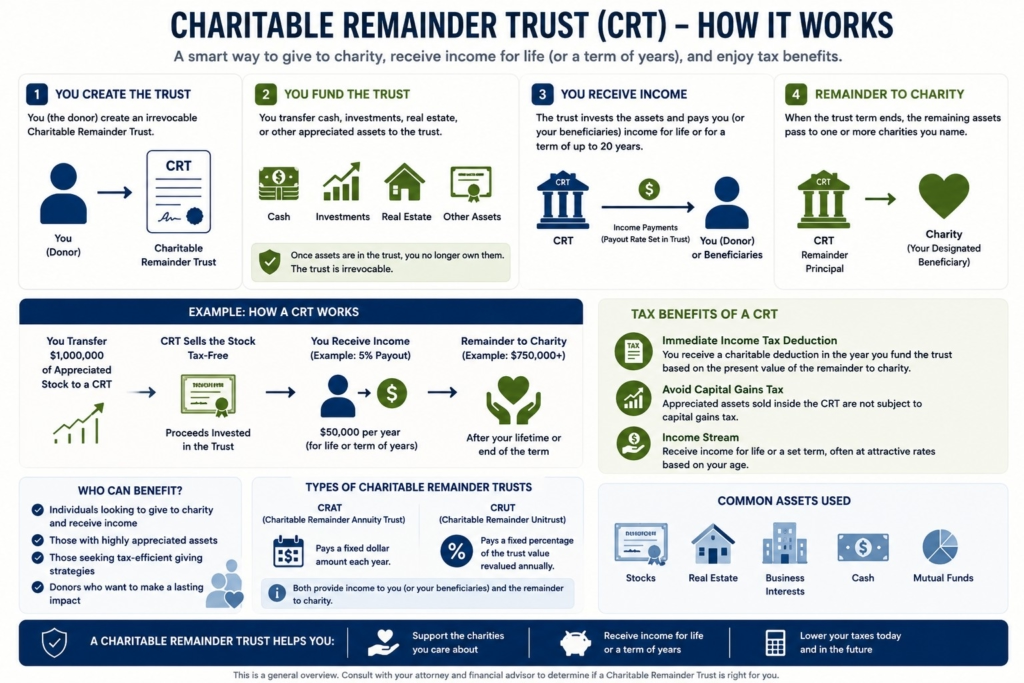
With a CRT:
- Assets transfer into the trust
- The donor receives income for life or a period of years
- Remaining assets eventually pass to charity
Why Families Use CRTs
Potential benefits may include:
- Income generation
- Charitable giving
- Tax planning
- Diversification of appreciated assets
- Estate-planning flexibility
The transcript explains that donors may receive a current income-tax deduction based on the present value of the future charitable interest.

Business owners and retirees with highly appreciated assets often explore CRT planning.
9. Asset Protection Trust
Asset protection trusts are designed to help shield assets from future creditors or lawsuits.
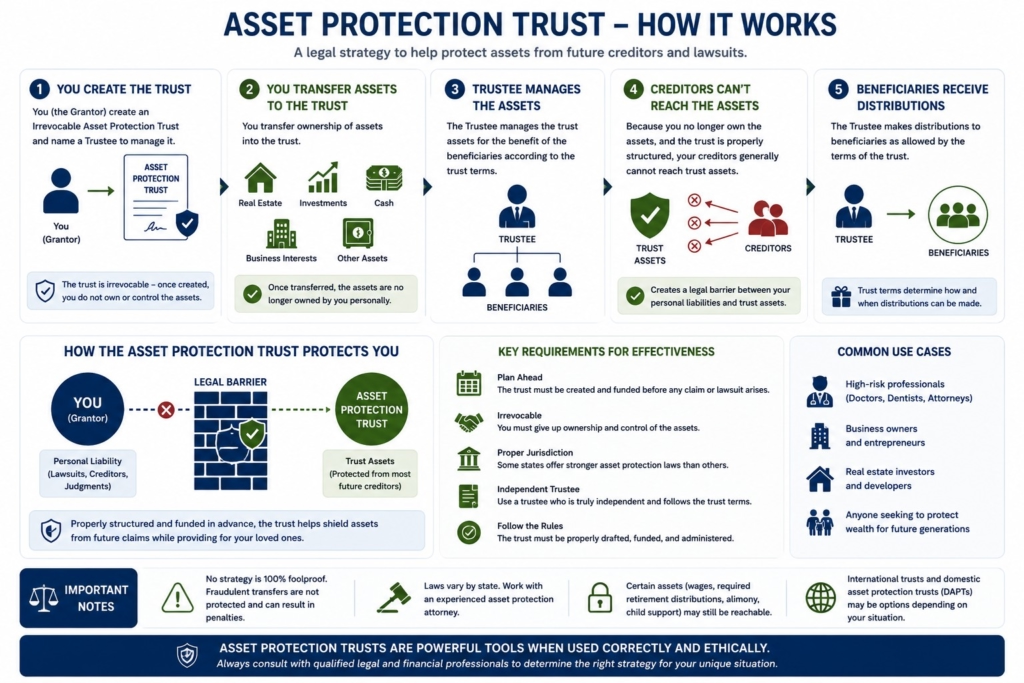
These trusts are often considered by:
- Physicians
- Contractors
- Real estate investors
- Developers
- Business owners
- Professionals with liability exposure
Important Reality Check
Asset protection planning must be done proactively.
Trying to transfer assets after a lawsuit or creditor issue arises may fail and create legal problems.
Most asset protection trusts are irrevocable and involve significant legal complexity.
10. Crummey Trust
The Crummey Trust is named after a legal case and is used primarily for gift-tax planning.
The Problem It Solves
Annual gifts to beneficiaries may qualify for annual exclusion rules.
However, gifts into trusts are often considered “future interests,” which may not qualify for those exclusions.
The Crummey Solution
The trust gives beneficiaries temporary withdrawal rights.
For example:
- Parents contribute money into a trust
- Beneficiaries can withdraw funds for a limited time
- If they do not withdraw the funds, the assets remain in trust
This structure may allow the gift to qualify for annual exclusion treatment while still preserving long-term trust control.
Which Trust Is Right for You?

The right trust depends on your goals.
A growing business owner in Brookhaven may have completely different concerns than:
- A retiree entering Medicare years
- Parents with young children
- Families caring for a special-needs child
- A physician worried about liability exposure
- A real estate investor with multiple properties
Trust planning is rarely one-size-fits-all.
In fact, many comprehensive estate plans involve multiple trusts working together.
Estate Planning Is About More Than Taxes
Many people assume trusts are only about avoiding taxes.
But modern estate planning often focuses more heavily on:
- Family control
- Privacy
- Probate avoidance
- Healthcare planning
- Asset protection
- Long-term care concerns
- Protecting heirs
- Business continuity
For many successful families, the larger goal is preserving flexibility while reducing future chaos for loved ones.
Final Thoughts
Trusts can be incredibly powerful tools when properly structured and coordinated with your financial, legal, retirement, insurance, and tax planning strategies.
However, trusts are also highly technical legal documents that should be drafted and reviewed by qualified estate-planning attorneys.
If you are a business owner, retiree, or family evaluating estate planning options in Atlanta or surrounding areas like Sandy Springs, Roswell, or Alpharetta, coordinating your trust planning with your broader financial strategy may help uncover opportunities and risks that are otherwise overlooked.
Learn more at Emergent Financial Group.
Need help getting started?
Explore how Emergent Financial Group partners with Families and Small Business Owners for comprehensive Benefit and Estate Planning.
Please don’t hesitate to contact us here

"Helping Businesses Build Better Benefits. Helping Employees Build Better Retirements. RIA in Buckhead. Benefit Planning. Wealth Management. Wills. Trusts. Estate Planning."