Atlanta Small Businesses Give Employees Equity

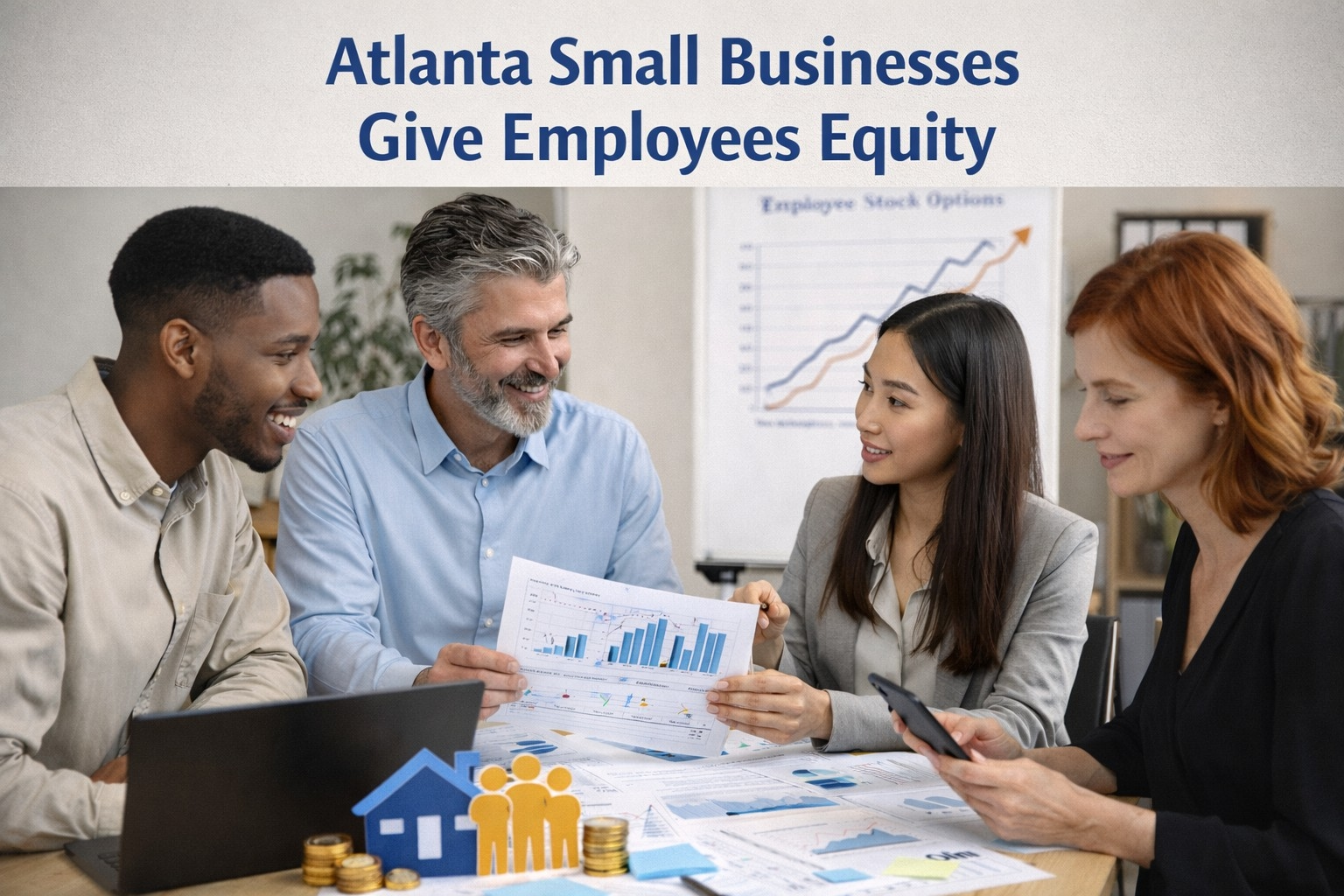
Employee ownership is one of the most effective ways for small businesses to attract talent, retain key employees, and build long-term company value. A well-designed Employee Stock Ownership Plan (ESOP) allows employees to share in the success of the company while helping business owners create a succession strategy.
This Small Business ESOP Setup Guide explains how ESOPs work, how to create one, and alternative strategies small business owners can use to reward and retain employees.
Whether you run a growing startup or a mature private company, implementing an ESOP can help transform employees into owners who are invested in the company’s future.
What Is an ESOP?
An Employee Stock Ownership Plan (ESOP) is a retirement-style benefit plan that allows employees to acquire ownership shares in the company they work for.
Unlike traditional stock options, employees typically do not purchase the shares themselves. Instead, the company contributes stock to an ESOP trust, which holds shares on behalf of employees.
Over time, employees receive allocations of stock in their accounts.
Key Characteristics of ESOPs
- Employees accumulate shares gradually
- Ownership is tied to employment tenure
- Shares are usually distributed through a company-managed trust
- Employees receive the value when they retire or leave the company
ESOPs are most commonly used by privately held businesses with 20–500 employees, though larger companies also use them.
Why Small Businesses Create ESOP Plans
Small businesses use ESOPs for several strategic reasons.
Benefits for Employers
- Attract talented employees
- Retain key team members
- Reduce turnover
- Create a succession plan
- Build employee loyalty
- Improve company culture
Benefits for Employees
- Opportunity to build ownership wealth
- Retirement savings tied to company growth
- Motivation to contribute to business success
- Stronger alignment with company goals
When employees have ownership stakes, they often think and act like owners.
How ESOPs Work in a Small Business
An ESOP works through a trust structure that holds company shares.
The process generally follows these steps:
- The company creates an ESOP trust.
- The company contributes shares or cash to the trust.
- The trust allocates shares to employee accounts.
- Employees accumulate shares over time through vesting.
- When employees leave or retire, the company buys back their shares.
This buyback mechanism ensures employees receive value while maintaining private company ownership.
Step-by-Step Small Business ESOP Setup Guide
Creating an ESOP requires careful planning and professional guidance.
Step 1: Evaluate Whether an ESOP Is Right for Your Business
Before creating an ESOP, business owners should evaluate several factors:
- Company profitability
- Stable cash flow
- Long-term growth potential
- Leadership succession planning
- Employee retention needs
Companies with consistent revenue and long-term goals tend to benefit the most from ESOP structures.
Step 2: Hire ESOP Advisors and Legal Experts
An ESOP requires professional guidance.
Typical advisors include:
- ESOP attorneys
- Financial advisors
- Valuation experts
- Third-party plan administrators
These professionals help ensure compliance with federal regulations and tax laws.
Step 3: Conduct a Company Valuation
The next step is determining the value of the business.
An independent valuation firm evaluates factors such as:
- Revenue
- Profit margins
- Industry growth
- Assets and liabilities
- Market comparable
This valuation determines the price of company shares for the ESOP trust.
Step 4: Create the ESOP Trust
The company establishes an ESOP trust to hold shares for employees.
The trust acts on behalf of employees and manages stock allocations.
Shares can enter the trust through:
- Company stock contributions
- Cash contributions used to purchase stock
- Leveraged ESOP loans used to buy shares from owners
Step 5: Determine Employee Eligibility
Not every employee necessarily participates immediately.
Typical eligibility requirements include:
- Minimum age (often 21)
- Minimum employment period (usually 1 year)
- Full-time employment status
Once eligible, employees begin receiving allocations of stock.
Step 6: Create a Vesting Schedule
A vesting schedule determines when employees fully own their allocated shares.
Common vesting schedules include:
| Years of Service | Ownership Percentage |
|---|---|
| 1 year | 0% |
| 2 years | 20% |
| 3 years | 40% |
| 4 years | 60% |
| 5 years | 80% |
| 6 years | 100% |
This structure encourages long-term employee commitment.
Step 7: Allocate Shares to Employee Accounts
We meticulously handle your finances
so you don’t have to worry.
We create unique opportunities
that combine your financial goals with our knowledge for notable success.
✓ Minimal risk, maximum return
✓ Over 1,000 mutual funds
Each year, shares are distributed to employee accounts.
Allocation formulas often consider:
- Salary levels
- Years of service
- Position in the company
- Overall contribution to the company
Employees gradually accumulate ownership over time.
Step 8: Establish Share Buyback Rules
Since most ESOP companies are private, employees cannot sell shares on public markets.
Instead, the company agrees to buy back shares when employees leave, retire, or pass away.
This process ensures employees receive the financial value of their ownership.
Step 9: Communicate the Plan to Employees
Education is critical for ESOP success.
Employees should understand:
- How ownership works
- How shares are allocated
- How vesting works
- How payouts occur
Companies that educate employees about ownership often see stronger engagement.
Alternative Equity Incentives for Small Businesses
Not every small business needs a traditional ESOP. Some companies prefer simpler ownership incentive programs.
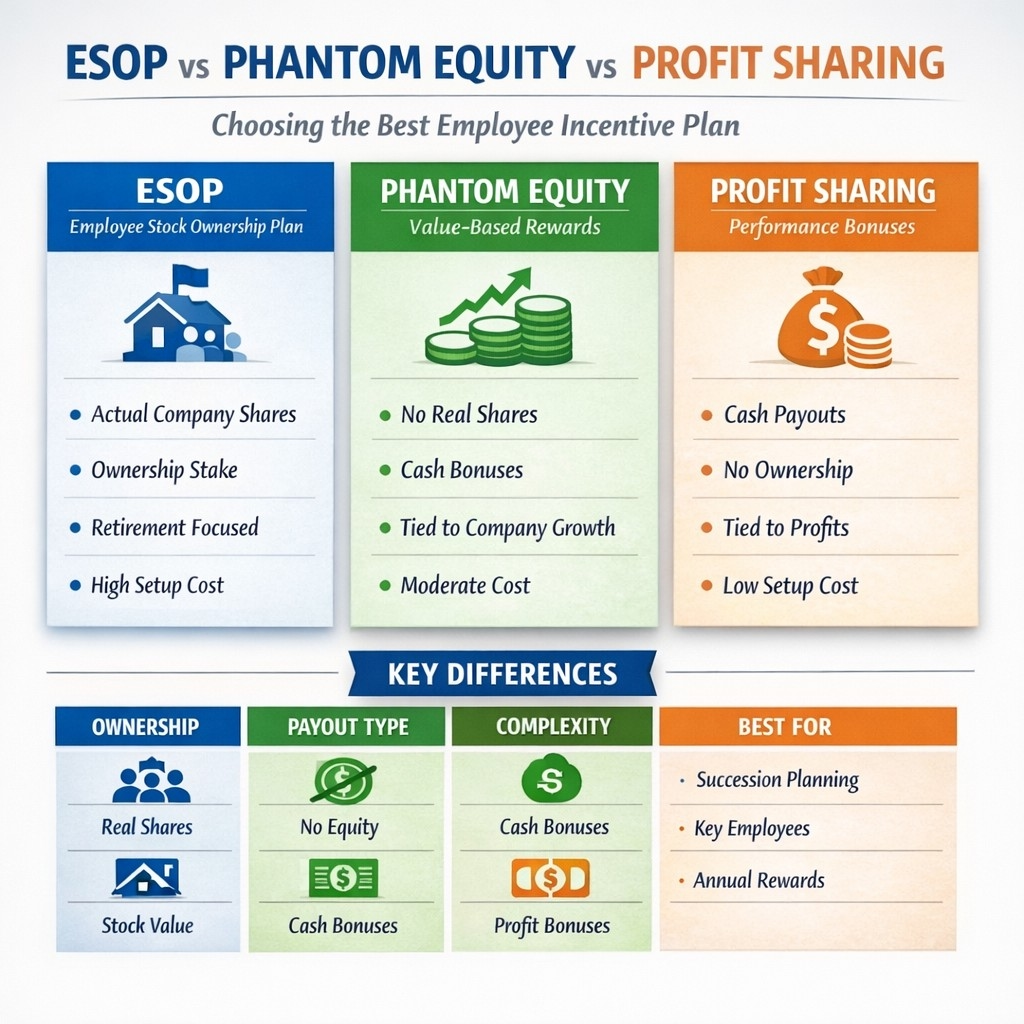
Phantom Stock Plans
Phantom stock provides employees with cash bonuses tied to company value.
Benefits include:
- No dilution of ownership
- Easier administration
- Flexible payout structures
Employees receive financial rewards based on company performance.
Stock Option Plans
Stock options allow employees to buy company shares at a fixed price.
These plans are common in:
- startups
- technology companies
- growth-focused businesses
Employees benefit when company valuation increases.
Using Cash Value Life Insurance as an Executive Incentive
Some small businesses use cash value life insurance policies as key employee retention tools.
This strategy works as a form of deferred compensation.
How the Strategy Works
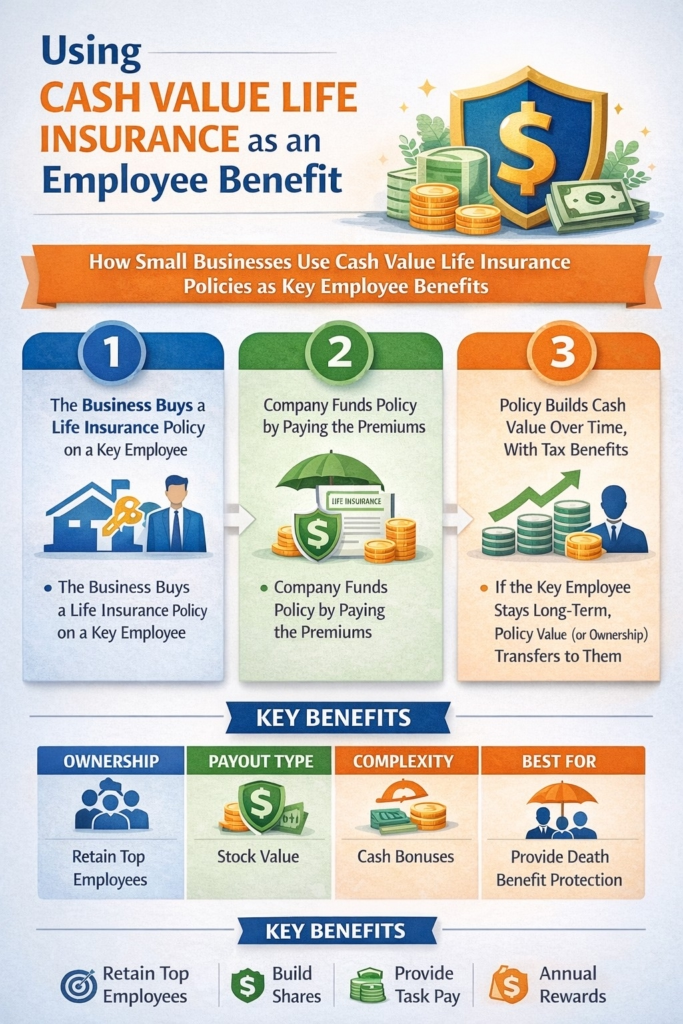
- The company purchases a life insurance policy on a key employee.
- The business pays the premiums.
- The policy builds cash value over time.
If the employee remains with the company for a specified period, the policy benefits may transfer to them.
Potential Benefits for Key Employees
Depending on the structure, employees may receive:
- Access to the policy’s cash value
- Retirement income potential
- Death benefit protection for family members
- Ownership of the policy after vesting milestones
If the employee leaves the company early, the business typically retains control of the policy.
This structure helps businesses reward and retain high-performing employees.
Because tax and insurance rules can vary, companies should consult financial professionals before implementing this type of strategy.
Common Mistakes When Creating an ESOP
Small businesses should avoid several common pitfalls.
Lack of Planning
An ESOP should align with long-term company goals and succession plans.
Poor Employee Communication
If employees do not understand the value of the plan, the motivational benefits may be lost.
Insufficient Cash Flow
Companies must have enough cash to buy back shares when employees leave.
Frequently Asked Questions
How much does it cost to create an ESOP?
Setup costs often range between $40,000 and $150,000, depending on company size and complexity.
What size company should consider an ESOP?
Most ESOPs are used by companies with 20 to 500 employees and stable profits.
Can small businesses still control ownership with an ESOP?
Yes. Many ESOPs involve partial ownership transfers, allowing founders to maintain control.
Are ESOP contributions tax-deductible?
In many cases, company contributions to ESOPs are tax-deductible, which can create significant financial advantages.
What happens when an ESOP employee retires?
The company typically buys back the employee’s shares at the current company valuation.
Can ESOPs be used for business succession planning?
Yes. Many owners use ESOPs as a long-term exit strategy, gradually transferring ownership to employees.
Conclusion
This Small Business ESOP Setup Guide shows how employee ownership can transform a company’s culture and long-term success.
When employees share in company ownership, they often become more engaged, motivated, and committed to the business’s future.
For small business owners, ESOPs offer a powerful tool for:
- Retaining key employees
- Building company value
- Creating succession plans
- Rewarding long-term contributors
Whether through traditional ESOPs, stock options, phantom equity, or creative strategies like cash value life insurance for key employees, ownership-based compensation can help businesses grow stronger while rewarding the people who make that growth possible.
Need help getting started?
Explore how Emergent Financial Group partners with families, employees and small business owners for comprehensive wealth management and estate planning.
Helping Atlanta Businesses Build Stronger Financial Futures
If your company is reviewing employee benefits, executive compensation structures, or long-term wealth strategies, the advisors at Emergent Financial Group help Atlanta companies design benefit programs that strengthen employee loyalty and financial security.
Please don’t hesitate to contact us here
Emergent Financial Group would love to help.
Visit our Knowledge Base to learn more:
Or reach out to schedule a private planning conversation.

"Helping Businesses Build Better Benefits. Helping Employees Build Better Retirements. RIA in Buckhead. Benefit Planning. Wealth Management. Wills. Trusts. Estate Planning."