
Medicare Late Enrollment Penalties: What Unemployed Adults on COBRA Need to Know Before Turning 65

If you are approaching Medicare eligibility while unemployed, on COBRA, recently laid off, or between jobs, one of the most expensive mistakes you can make is misunderstanding Medicare enrollment rules.
Many people assume COBRA automatically protects them from Medicare penalties or allows them to delay Medicare enrollment indefinitely. In many situations, that assumption is incorrect.
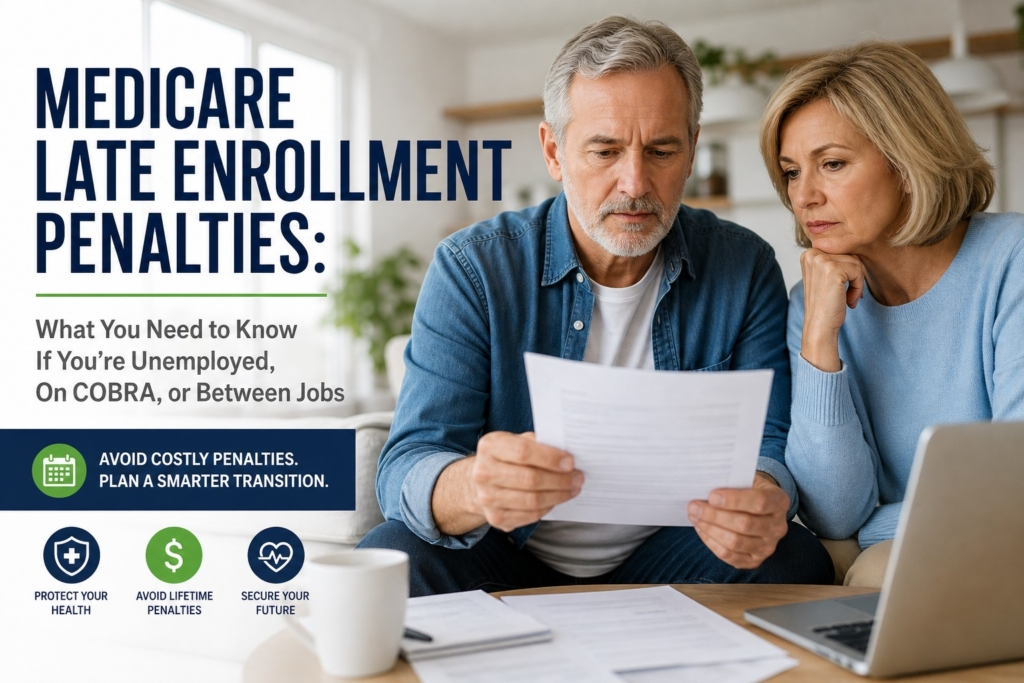
At Emergent Financial Group, we regularly speak with individuals and couples across the Georgia and the greater Atlanta area who are trying to bridge the gap between employer coverage, COBRA, Marketplace coverage, Medicare, and retirement planning.
This article explains:
- How Medicare late enrollment penalties work
- What happens if you are on COBRA when you turn 65
- What unemployed individuals should consider
- How Medicare interacts with ACA/Marketplace health insurance
- What options may exist if you cannot find work for an extended period
- Common mistakes that can create permanent penalties
Understanding Medicare Enrollment Basics
Most Americans become eligible for Medicare at age 65.
Your first opportunity to enroll is called your Initial Enrollment Period (IEP).
This window generally includes:
- The 3 months before your 65th birthday month
- Your birthday month
- The 3 months after your birthday month
During this period, you can enroll in:
- Medicare Part A (Hospital Insurance)
- Medicare Part B (Medical Insurance)
- Medicare Part D (Prescription Drug Coverage)
- Medicare Advantage plans if desired
Failing to enroll on time can create:
- Lifetime premium penalties
- Coverage delays
- Gaps in healthcare coverage
- Higher out-of-pocket costs during retirement

The Most Common Misunderstanding: COBRA Does NOT Usually Protect You From Medicare Penalties
Many people lose a job around age 63–65 and elect COBRA coverage.
They often believe:
“I already have insurance through COBRA, so I can wait on Medicare.”
Unfortunately, Medicare generally does not treat COBRA as active employer coverage for delaying Part B enrollment penalties.
That distinction is critical.
Active Employer Coverage vs COBRA
Medicare typically allows delayed enrollment without penalties only when you have:
- Coverage from ACTIVE current employment
- Either your own employment or your spouse’s active employment
COBRA is usually considered:
- Continuation coverage
- Not active employer coverage
This means:
- Your Medicare Special Enrollment protections may disappear once employment ends
- Your Medicare enrollment clock may already be running
What Happens if You Stay on COBRA and Delay Medicare?
A common scenario:
- Employee loses job at age 64
- Elects 18 months of COBRA
- Turns 65 during COBRA coverage
- Decides not to enroll in Medicare Part B
- COBRA eventually ends
- Learns they owe penalties and may need to wait for enrollment
This can become extremely expensive.
Medicare Part B Late Enrollment Penalty
The Medicare Part B penalty is one of the most damaging because it is generally permanent.
How the Penalty Works
For every 12-month period you were eligible for Part B but failed to enroll, your monthly premium may increase by 10%.
That increase usually lasts for life.
Example:
- Delay Part B for 2 years
- Premium penalty may become 20%
- You may pay that higher amount permanently
Medicare Part D Late Enrollment Penalty
Prescription drug coverage can also trigger penalties.
If you go more than 63 consecutive days without:
- Creditable prescription drug coverage
- Or a qualifying Part D plan
You may owe a permanent Part D penalty.

Even relatively healthy individuals should pay attention to this rule because prescription needs can change quickly in retirement.
COBRA and Medicare Coordination Problems
Another issue many people discover too late:
Once you become Medicare eligible, COBRA may pay SECONDARY to Medicare.
If you failed to enroll in Medicare because you assumed COBRA was enough:
- COBRA may refuse to pay certain claims
- You may become responsible for large medical bills
- Hospitals and providers may bill you directly
This creates serious financial risk for unemployed individuals trying to preserve savings.
What If You Are Unemployed at 65 and Need Health Insurance?
This is one of the most stressful transitions many Americans face.
You may be:
- Too young to feel “retired”
- Looking for work
- Waiting for Social Security
- Concerned about healthcare costs
- Trying to preserve retirement assets
- Caring for a spouse
- Managing chronic conditions
The good news is that you still have options.
Option 1: Enroll in Medicare on Time

For many unemployed adults approaching 65, enrolling in Medicare when first eligible is often the safest approach.
This may include:
- Part A
- Part B
- Part D
- A Medicare Supplement plan and drug plan
- Or a Medicare Advantage plan
This approach can:
- Avoid permanent penalties
- Prevent future coverage gaps
- Reduce coordination issues with COBRA
- Create more predictable healthcare costs
Option 2: Compare Medicare vs ACA Marketplace Coverage Carefully
Some unemployed adults consider staying on an ACA Marketplace plan instead of Medicare.
However, once you become Medicare eligible:
- Premium subsidies may stop
- Delaying Medicare can create penalties
- Remaining solely on Marketplace coverage may create problems later
This is especially important for individuals using:
- HealthCare.gov
- Georgia Access
Many people are surprised to learn that Marketplace coverage and Medicare coordination rules can become complicated after age 65 eligibility begins.
What If You Want to Keep Working?
If you or your spouse continue working and have active employer coverage, you may qualify for a Special Enrollment Period later.
However:
- Employer size matters
- Plan structure matters
- HSA contributions matter
- COBRA rules still differ from active employment
This is why many individuals nearing Medicare eligibility should review:
- Current employer coverage
- COBRA election timing
- Medicare eligibility timing
- Drug coverage status
- Retirement income planning
- Social Security timing
together rather than separately.
Medicare and Early Retirement Planning
Healthcare is one of the largest retirement expenses many families face.
If you retire before 65, you may need a bridge strategy involving:

- COBRA
- ACA Marketplace plans
- Spousal coverage
- Private individual insurance
- Health reimbursement arrangements
- Short-term healthcare planning
Once Medicare eligibility begins, however, the rules change significantly.
This is where many financially responsible individuals accidentally trigger penalties because they assume:
“I already have insurance, so I’m covered.”
Unfortunately, Medicare rules are more specific than that.
Real-World Example
Consider a hypothetical business professional in Sandy Springs:
- Age 64
- Recently laid off
- Elects COBRA
- Searching for work
- Delays Medicare because COBRA seems easier
At age 67:
- COBRA expires
- Medicare Part B penalty applies
- Drug coverage penalty applies
- Enrollment delayed until a future enrollment period
- Several months without primary coverage occur
This type of situation is more common than many people realize.
Questions You Should Ask Before Turning 65
If you are unemployed, on COBRA, or transitioning careers near Medicare age, consider asking:
- Is my current coverage considered active employer coverage?
- Does COBRA protect me from Medicare penalties?
- When does my Medicare enrollment window begin?
- Do I need Part B immediately?
- Is my drug coverage considered creditable?
- Should I compare Medicare Advantage vs Medigap?
- Will my spouse be affected?
- How will this impact retirement income planning?
- What happens if I cannot find another job soon?
Why Healthcare Decisions Should Be Coordinated With Financial Planning
Medicare decisions affect more than healthcare.
They can impact:

- Retirement cash flow
- Investment withdrawals
- HSA planning
- Social Security timing
- Tax planning
- IRMAA surcharges
- Estate planning
- Long-term care considerations
Many people make Medicare elections in isolation without realizing how connected those decisions are to their broader retirement plan.
Final Thoughts
If you are approaching age 65 while unemployed, on COBRA, or transitioning between jobs, Medicare enrollment timing deserves careful attention.
The wrong decision can create:
- Permanent late enrollment penalties
- Delayed coverage
- Higher lifetime healthcare costs
- Unexpected claim denials
The good news is that proactive planning may help you:
- Avoid penalties
- Preserve retirement savings
- Maintain continuous healthcare coverage
- Coordinate Medicare with your long-term financial goals
Before delaying Medicare, make sure you fully understand whether your current coverage actually qualifies you to postpone enrollment safely.
Related Topics You May Want to Review
You may also want to explore:
- Medicare IRMAA planning
- Social Security timing strategies
- Estate planning after age 65
- Healthcare planning before retirement
- GA Marketplace vs Medicare transition planning
- Retirement income distribution strategies
- HSA rules near Medicare eligibility
For individuals and couples in the greater Atlanta area navigating Medicare and retirement transitions, Emergent Financial Group can help evaluate how healthcare decisions integrate with retirement income, benefits, tax planning, and long-term financial planning.