7 Employee Strategies Used to Renegotiate and Strengthen Employee Loyalty in GA

Why Traditional Negotiation Advice Fails Many Businesses
Most articles about negotiation focus on simple ideas like “prepare well,” “listen carefully,” or “communicate clearly.” While those basics matter, they rarely solve the deeper issues businesses face when renegotiating contracts with employees.
Why Atlanta Businesses Are Rethinking Employee Benefits Strategy
In reality, successful contract renegotiation discussions require structural thinking. Leaders in Georgia must redesign agreements so both sides gain flexibility, security, and incentives for growth.
Businesses in Atlanta operate in a competitive labor market where skilled professionals expect more than standard salary increases. Companies that rely on traditional compensation models often struggle to retain top talent.
Instead, the most successful organizations approach renegotiation as a strategic redesign of the employment relationship, not just a discussion about pay.
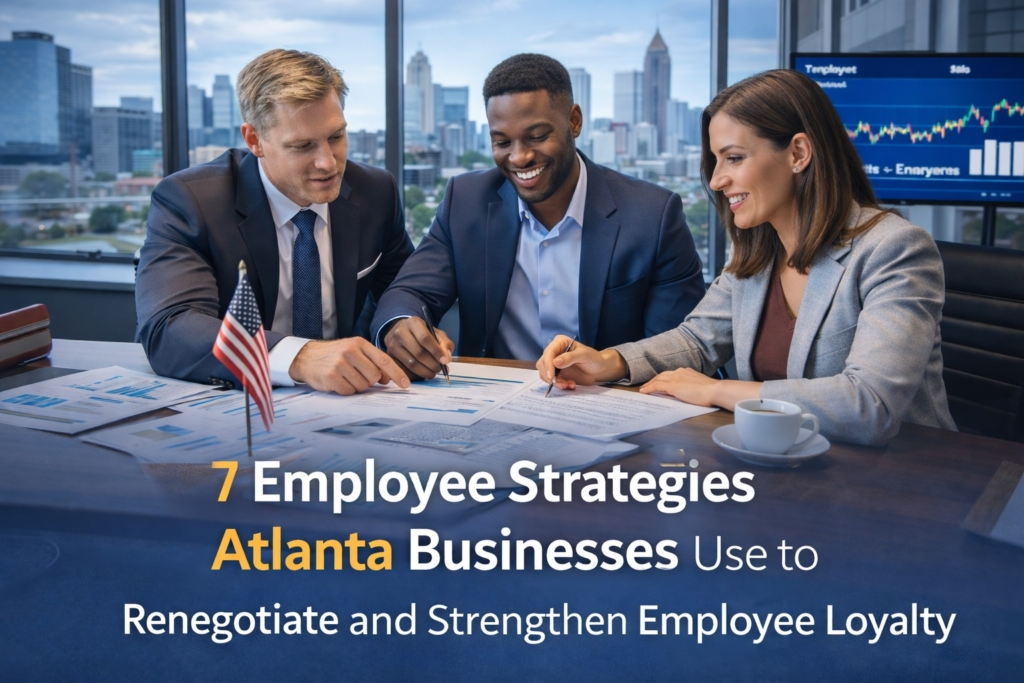
Reframing Contract Renegotiation as a Value Exchange
Contract renegotiation works best when both parties shift the conversation away from fixed compensation and toward economic value creation.
Mapping Economic Value Instead of Job Roles
Rather than negotiating based on job titles, forward-thinking businesses analyze how an employee contributes measurable value.
Examples include:
- Revenue generated
- Operational efficiencies created
- Customer retention improvements
- Cost reductions or risk management
Once value is mapped, compensation discussions become more collaborative. Both sides focus on growing the total value rather than dividing a fixed pool of resources.
Aligning Incentives with Growth
Instead of debating salary alone, businesses increasingly align employee incentives with company performance.
Examples include:
| Incentive Model | Strategic Benefit |
|---|---|
| Profit-sharing plans | Encourages company-wide collaboration |
| Revenue participation | Rewards direct business growth |
| Milestone bonuses | Supports long-term projects |
| Retention bonuses | Reduces turnover risk |
These structures turn renegotiation discussions into growth planning conversations.

Negotiation Strategy #1: Build Flexibility with Employee Benefits Instead of Static Compensation
One of the most effective renegotiation solutions is moving away from rigid benefit structures.
Traditional packages lock employees into the same benefits regardless of personal priorities. However, employees value different things depending on their stage of life.
A flexible benefit system allows employees to allocate compensation across categories such as:
- Retirement contributions
- Healthcare enhancements
- Student loan assistance
- Additional vacation time
- Childcare support
Companies sometimes implement benefit allocation budgets, allowing employees to choose how their benefit dollars are distributed.
This approach reduces renegotiation conflicts because employees feel they control their own compensation structure.
Negotiation Strategy #2: Use Financial Transparency to Create Leverage
Many organizations avoid discussing financial metrics with employees during negotiations. However, selective transparency can actually strengthen trust.
For example, business leaders may share:
- Revenue growth trends
- Key cost pressures
- Strategic investment priorities
When employees understand the financial landscape, negotiations become more realistic.
Instead of assuming leadership is withholding compensation, employees see how benefits must fit within broader financial strategy.
Transparency also opens the door for collaborative problem solving. Employees may suggest solutions that leadership had not considered.
Negotiation Strategy #3: Convert Fixed Costs into Performance-Based Benefits

One of the biggest mistakes businesses make is increasing fixed compensation costs that remain even during downturns.
Smart renegotiations shift some compensation into performance-driven benefits.
Examples include:
- Quarterly profit participation
- Customer satisfaction bonuses
- Innovation incentives
- Operational efficiency rewards
These structures reward employees for contributing to growth while protecting the company during slower periods.
The result is a compensation model that evolves with business performance rather than remaining static.
Negotiation Strategy #4: Offer Strategic Soft Benefits That Cost Less but Deliver More

Not all benefits require large financial investments.
Some of the most impactful benefits address autonomy, flexibility, and professional trust.
Examples increasingly seen in Atlanta companies include:
Work autonomy frameworks
Instead of strict schedules, employees operate within defined productivity metrics.
Meeting-free productivity blocks
Organizations designate uninterrupted work periods during the week to improve focus.
Compressed work weeks
Employees complete their hours over four days instead of five.
These benefits improve work-life balance while costing companies very little.
Negotiation Strategy #5: Redesign Benefits Around Employee Life Stages
Many companies treat all employees the same during renegotiation discussions, but life circumstances vary dramatically.
Leading organizations design benefits around life-stage needs.
For example:
| Career Stage | Valuable Benefits |
|---|---|
| Early career | Student loan support, mentorship |
| Mid-career | Family healthcare, flexible schedules |
| Leadership level | Wealth-building strategies |
| Late career | Phased retirement plans |
This targeted approach allows businesses to deliver meaningful benefits without increasing overall costs.
Negotiation Strategy #6: Introduce Wealth-Building Benefits
We’re numbers-focused
so you can focus on growing your business.
We deliver customized benefit plans that perfectly align your financial goals with our expertise for impressive results.
✓ Efficiency and profitability
✓ 1,000+ successful businesses
One of the most underutilized negotiation tools is helping employees build long-term financial security.
Employees increasingly value benefits that improve their financial future.
Examples include:
- Advanced retirement contribution strategies
- Employer-sponsored financial planning
- Equity participation opportunities
- Cash value life insurance strategies
Organizations that help employees build wealth often see significantly stronger loyalty.
Financial education programs can also reduce employee stress and improve productivity.
Negotiation Strategy #7: Use Third-Party Advisors to Reframe Negotiations

Contract renegotiation discussions sometimes become emotional or adversarial when handled internally.
Many businesses in Georgia now involve external advisors to help structure solutions.
These advisors can assist with:
- Benefit plan optimization
- financial planning for Atlanta business owners
- estate planning for entrepreneurs
- executive compensation strategies
Financial advisors can also introduce strategies that business owners and HR teams may not be aware of.
For example, firms like Emergent Financial Group help organizations design benefit structures that support both employee retention and long-term financial stability.
More information about strategic benefit planning can be found at:
https://emergentfingrp.com

Innovative Benefits Used by Leading Businesses in Atlanta
Companies throughout the Atlanta business community are experimenting with creative benefit strategies to remain competitive.
Some emerging trends include:
Financial wellness programs
Employees receive coaching on debt management, investing, and retirement planning.
Personal development stipends
Employees in the Metro Atlanta workforce receive annual allowances for courses, books, or professional development.
Hybrid work ecosystems
Instead of simple remote policies, Atlanta companies redesign office spaces for collaboration while allowing remote productivity.
These programs improve employee satisfaction while strengthening organizational culture.
How Contract Renegotiation Strengthens Culture and Retention
When renegotiation discussions are handled strategically, they create long-term benefits for both Georgia employers and employees.
Positive outcomes often include:
- Higher employee engagement
- Reduced turnover
- Stronger trust between leadership and staff
- Greater alignment between company goals and employee incentives
In many cases, the renegotiation process itself becomes an opportunity to reinforce transparency and collaboration.
Frequently Asked Questions
What makes contract renegotiation discussions successful?
The most successful negotiations focus on creating value for both parties rather than debating fixed compensation numbers.
Are flexible benefits better than salary increases?
In many cases, yes. Flexible benefits allow employees to prioritize what matters most to them without increasing fixed business costs.
What benefits improve employee loyalty the most?
Long-term financial security benefits, career development opportunities, and workplace flexibility tend to have the strongest impact.
Should businesses involve advisors during renegotiation?
External advisors can introduce financial strategies and benefit structures that internal teams may not know about.
Why do many renegotiations fail?
They often fail because discussions focus only on salary rather than broader compensation strategy.
How can small businesses compete with large companies on benefits?
Small businesses and Atlanta companies can offer flexibility, growth opportunities, and financial education programs that large corporations often overlook.
Need help getting started?
Explore how Emergent Financial Group partners with Families and Small Business Owners for comprehensive Wealth Management and Estate Planning.
Helping Atlanta Businesses Build Stronger Financial Futures
If your company is reviewing employee benefits, executive compensation structures, or long-term wealth strategies, the advisors at Emergent Financial Group help Atlanta businesses design benefit programs that strengthen employee loyalty and financial security.
Please don’t hesitate to contact us here
Emergent Financial Group would love to help.
Visit our Knowledge Base to learn more:
Or reach out to schedule a private planning conversation.
"Helping Businesses Build Better Benefits. Helping Employees Build Better Retirements. RIA in Buckhead. Benefit Planning. Wealth Management. Wills. Trusts. Estate Planning."