“The Rockefeller Family Trust: Blueprint, Battles & Lessons for Generations”

Introduction
Few wealth-structures in American history rival the legacy engineering behind the John D. Rockefeller Sr. family fortune. What started with oil and industry evolved into a systematic trust-based blueprint that enabled the Rockefeller family to preserve wealth across six-seven generations. But along the way the family encountered legal skirmishes, government scrutiny and internal dynamics that inform vital lessons for your business-owner and high-net-worth clients today.
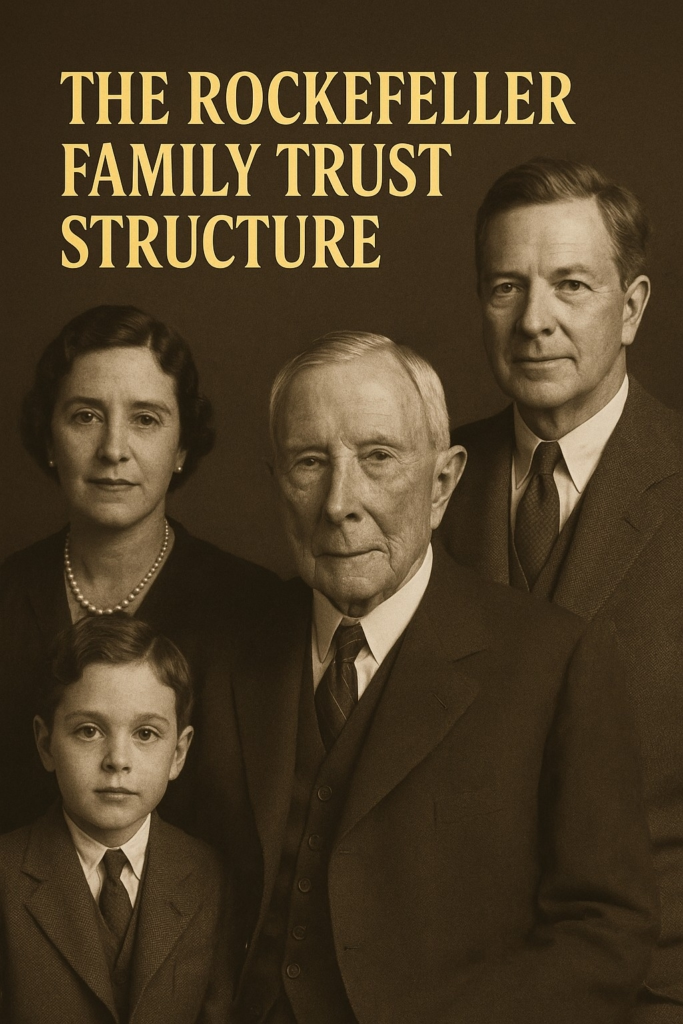
Setting the Stage: From Standard Oil to Family Trusts
John D. Rockefeller founded Standard Oil Company in 1870 and by the turn of the century had amassed what in his era was the largest individual fortune in U.S. history.
With wealth came two existential challenges: (a) how to manage and preserve it across generations, and (b) how to shield it from tax, dissipation and internal fragmentation.
In 1934 the family established a first major trust vehicle (often referred to as the “1934 Family Trust”). Then in 1952 they created a formal “Dynasty Trust” designed specifically for multi-generational wealth protection.
The fortune was held and managed by professional trustees (Chase Bank) rather than left in the hands of individual heirs.
Structure & Mechanics of the Trust System
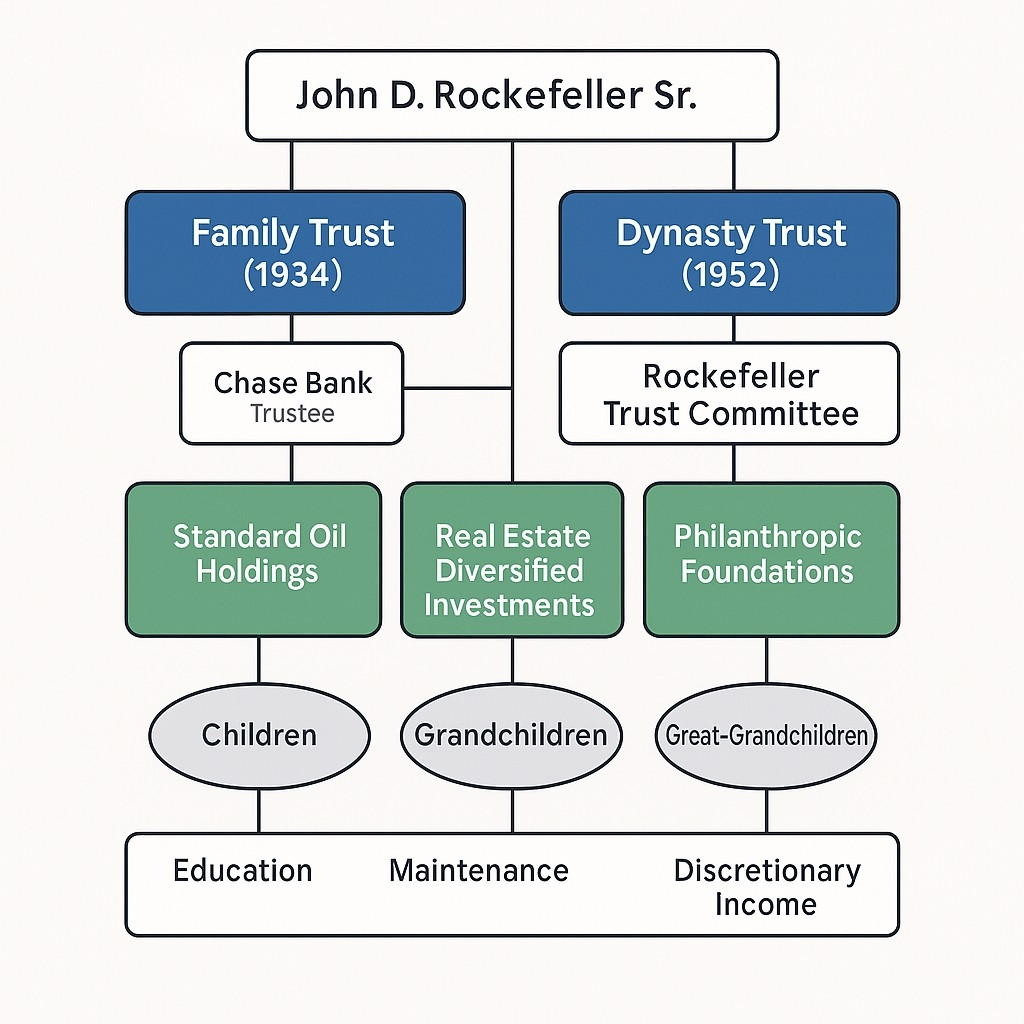
Here is a breakdown of how the structure worked (and you’ll use these in your client diagrams).
Settlor/Grantor
- John D. Rockefeller Sr. (and later family members) acted as the grantor of the major trust vehicles.
- By placing assets into trusts, he shifted them out of his taxable estate while maintaining beneficial oversight through trustees.
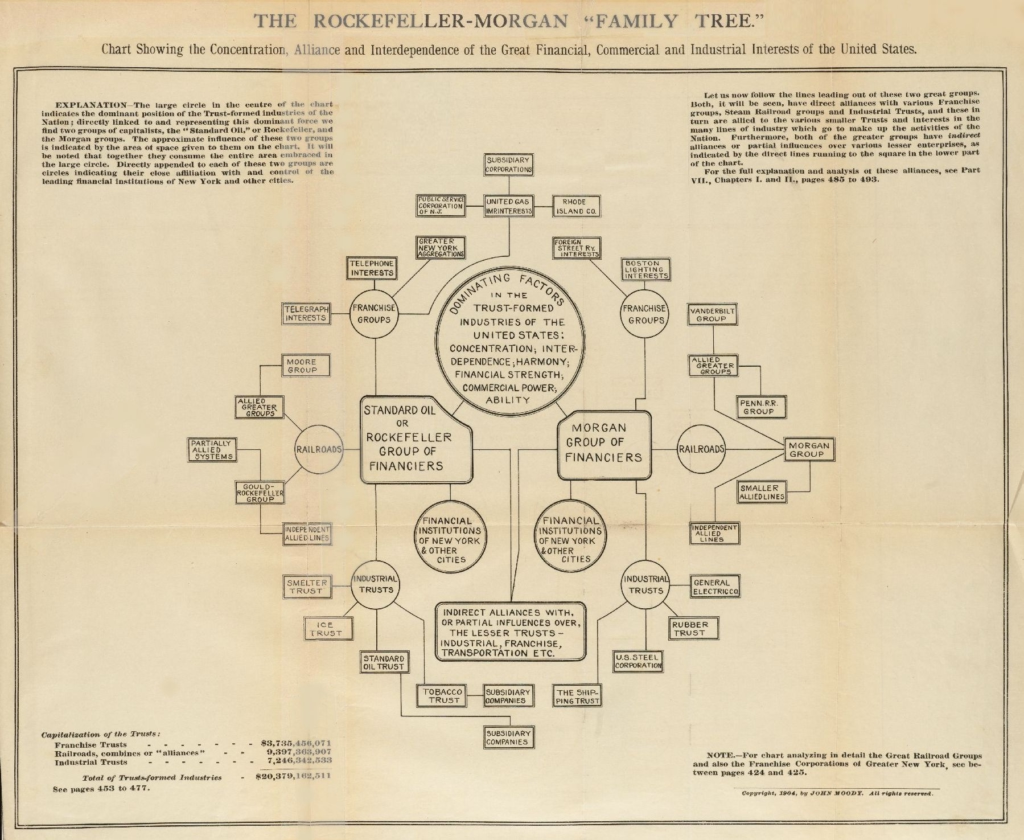
Trust Vehicles
- 1934 Family Trust: initial major vehicle to pool family wealth.
- 1952 Dynasty Trust: designed to perpetuate wealth across further generations, leveraging favorable state laws and generation-skipping strategies.
- These trusts were irrevocable, professional-trustee based, and included diversified assets (equities, real estate, business interests) rather than only one business line. mrclawcorp.com+1
Assets Held
- Interests in the successors of Standard Oil plus real estate and diversified investments.
- Charitable/trust-foundations (e.g., Rockefeller Foundation) formed parallel legacy vehicles.
Trustee/Governance
- The trusts were managed by professional institutional trustees (Chase Bank).
- Governance rules were established for distributions (education, maintenance) rather than handing out lump sums and risking dissipation.
- The structure included multigenerational oversight, beneficiary education, values/mission alignment.
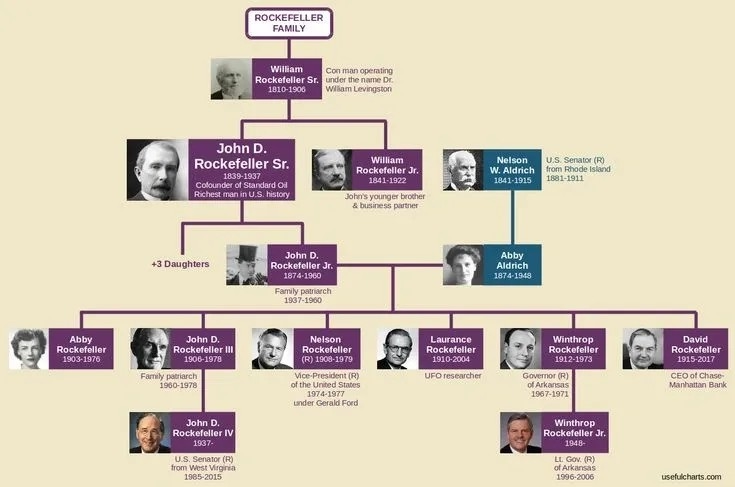
Beneficiaries & Distribution
- Beneficiary pool: children, grandchildren, further descendants (over 170 heirs by recent estimates).
- Provisions allowed for discretionary distributions (“suitable support and maintenance”) rather than outright ownership of principal. This enabled trustee control and reduction of risk from divorce, creditor claims or imprudent spending.
- Generation-skipping transfer (GST) planning: the trust allowed assets to remain in trust rather than be distributed and taxed at each generational level.
Tax & Legacy Protection
- By funding trusts and shifting assets out of the estate, the family minimized estate and gift taxes across many generations.
- The structure also shielded assets from direct individual creditor risk, divorce, mismanagement, and ensured centralised professional investment management.

top estate planning & financial service provider
Create long-lasting economic stability
with our meticulous assistance
Battles, Challenges & Lessons Learned
No dynasty is immune to challenge. The Rockefeller trusts faced internal, governmental and business-partner issues. Below are notable examples and their implications.
Government / Environmental Challenge
In one case, the heirs of John D. Rockefeller were sued under environmental law (Superfund liability) for cleanup costs of contamination allegedly caused by companies tied to the family. In Rockefellers Heirs Duck Superfund Payments the court found that due to timing issues the trustees were not liable for the cleanup costs.
Lesson: Even with a strong trust structure, outside regulatory exposures (environment, legacy businesses) can create contingent liabilities. The design must anticipate and include safe-guards (insurance, corporate separations, trustee oversight).
Internal Governance / Beneficiary Challenge
In Matter of Rockefeller, the court had to interpret the discretionary distribution language in the will/trust for substantial beneficiaries (127 descendants in one instance). The trustees sought guidance on whether the beneficiary’s other income must be considered when deciding “suitable support and maintenance”.
Lesson: The discretionary standard gives flexibility, but it also creates potential for litigation if beneficiaries feel mis-treated. Clear distribution criteria, communication with beneficiaries, and consistent trustee process are essential.
Tax/Legal Expense Challenge
In Estate of Nelson A. Rockefeller v. Commissioner (1985) the estate challenged whether certain expenses were deductible; the court denied the deduction for legal fees in the confirmation of Rockefeller as Vice President.
Lesson: Wealth preservation structures must accompany compliance in tax, business governance and documentation. Even large families with expert advisors continue to face tax-litigation risk.
Reputation / Philanthropy Tension
Although less of direct trust structure litigation, the family’s philanthropic foundations (e.g., Rockefeller Family Fund) later engaged in activism against ExxonMobil (the successor to Standard Oil) for climate-change denying practices — producing ironic reputational and family-governance tension.
Lesson: Family trusts often connect to philanthropy and public image. Estate structures must coordinate with philanthropic strategy, family governance and evolving values across generations.
Why It Worked, and Why It Still Works
- Centralised control + professional trustee: The use of institutional trustees (rather than purely individual control) gave continuity across generations.
- Irrevocability + generation-skipping: The trust vehicles were designed to remain intact for many generations rather than be distributed quickly and diluted.
- Distribution discipline: By providing for support, education, stewardship—not simply lump-sum inheritance—the structure encouraged responsible generational behaviors.
- Diversified asset base: Rather than being entirely tied to one business (oil), the trust portfolio diversified into real estate, equities, modern investments.
- Philanthropy integration: The family long viewed wealth as responsibility; the trust structure included legacy and value dimensions, not just dollars.
Implications for Small-Business Owners & High-Net-Worth
For a business owner in construction, healthcare or professional services—here are important takeaway lessons:
- Start early: The sooner you fund the trust (or plan for it) the more generational time it has to compound and reorganise.
- Use appropriate vehicles: Irrevocable trusts, dynasty trusts (in favourable jurisdictions), professional trustees—while scaled to the size of the family/business—add value.
- Define governance and family values: Wealth without values or structure often dissipates. Define distribution standards (health, education, maintenance), family council/constitution, trustee oversight.
- Anticipate third-party risk: Your client’s business may face regulation, environment, litigation. Trust design should integrate risk-mitigation (holding companies, insurance, asset protection).
- Philanthropy counts—both for tax and legacy: With your focus on benefits consulting, stop-loss, etc., tying in charitable strategy into the trust (CRT, philanthropic sub-trusts) can advance both tax planning and values.
- Beware the “divide & destroy” effect: Many fortunes fade by generation 2 or 3. The Rockefeller example shows how to avoid that by centralising, professionalising and educating heirs.
- Customize scale and complexity: Your clients won’t have Rockefeller-scale assets, but they DO have client-specific business interests, family dynamics, risk landscapes. Tailor trust architecture accordingly.
Summary
The Rockefeller family trust structure offers a master-class in long-term wealth preservation, inter-generational planning, and strategic governance. It is not simply the wealth that matters—but the structure, the rules, the people and the purpose behind the trust.
By combining a professional trustee, irrevocable trust vehicles, diversified assets, disciplined distributions, and philanthropic alignment, John D. Rockefeller’s descendants ensured the family’s fortune survived more than a century. Yet even this structure faced real battles—environmental claims, intra-family distribution controversies and tax disputes. For your clients—and your practice at Emergent Financial Group—the lessons are rich and highly applicable.
Ready to explore your savings?
Need help getting started?
Explore how Emergent Financial Group partners with Families and Small Business Owners for comprehensive Estate Planning.
Please don’t hesitate to contact us here

"Helping Businesses Build Better Benefits. Helping Employees Build Better Retirements. RIA in Buckhead. Benefit Planning. Wealth Management. Wills. Trusts. Estate Planning."