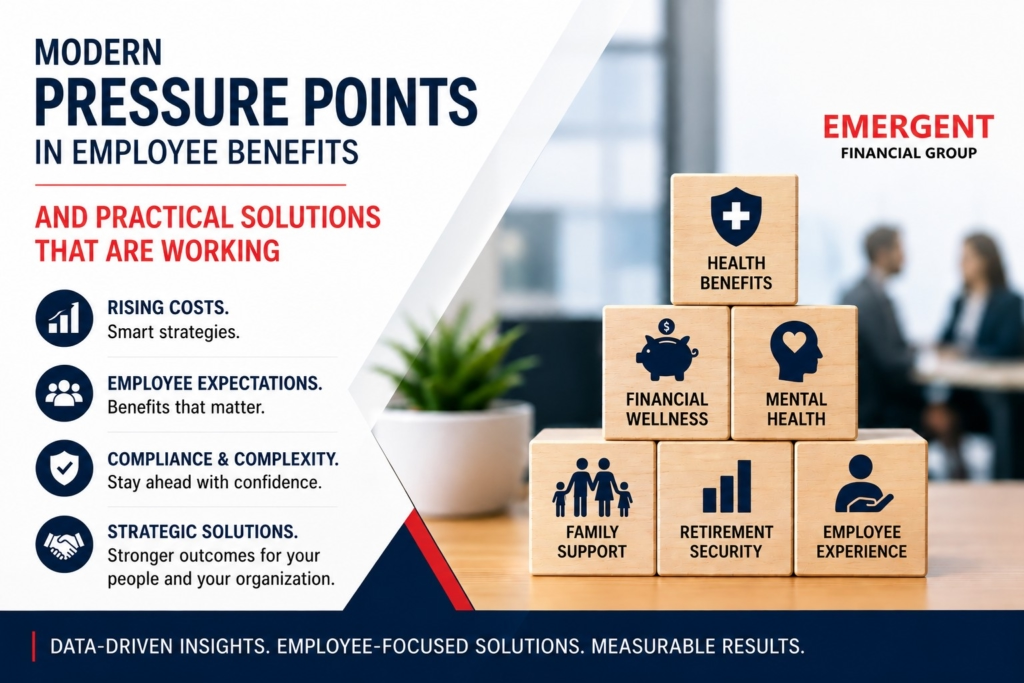
Modern Pressure Points in Employee Benefits—and Practical Solutions That Are Working

Employee benefits have become one of the most strategically important and operationally challenging parts of workforce management. Rising healthcare costs, changing employee expectations, compliance demands, and growing pressure to attract and retain talent are forcing employers to rethink how they design and manage their benefit programs.
This article outlines today’s most significant benefit planning pressure points, explains why they create problems for employers, and highlights practical solutions that organizations are using successfully.
The Core Pressure Point: Benefit Planning in a Rapidly Changing Environment
Benefit planning is the process of designing a package of health, retirement, wellness, and ancillary benefits that aligns with organizational goals while meeting employee needs and staying within budget.
Historically, benefits planning followed a relatively predictable cycle. Employers renewed plans annually, made incremental changes, and expected moderate cost increases. That model no longer works.
Today, benefit planning is under pressure from:
- Escalating medical and pharmacy costs
- Increased employee expectations for personalization and flexibility
- Competitive labor markets
- Regulatory complexity
- Administrative burden
- Growing mental health and financial wellness needs
The result is a planning environment where employers must balance cost control with workforce satisfaction and long-term strategic objectives.

Why Benefit Planning Has Become Problematic
1. Healthcare Costs Continue to Outpace Inflation
Medical costs have risen faster than general inflation for decades. Specialty drugs, chronic disease prevalence, and hospital consolidation are major contributors.
For employers, this means:
- Higher premiums
- Larger claims volatility
- More budget uncertainty
- Pressure to shift costs to employees
Cost-shifting, however, can reduce employee satisfaction and increase financial stress.

2. Employees Expect More Than Traditional Benefits
Workers increasingly value benefits that address total well-being, including:
- Mental health support
- Flexible work arrangements
- Student loan assistance
- Fertility and family-building benefits
- Financial wellness tools
- Caregiver support
A standard “one-size-fits-all” benefits package may no longer meet diverse workforce needs.
3. Benefits Have Become a Key Retention Tool
Employees compare benefit offerings when evaluating employers. Weak or confusing benefits can contribute to turnover, while well-designed programs support engagement and loyalty.
According to multiple labor market studies, employees consistently rank health insurance and retirement benefits among the top reasons they stay with an employer.
4. Compliance Requirements Are Increasing
Employers must navigate regulations such as:
- Affordable Care Act (ACA)
- ERISA
- COBRA
- HIPAA
- Mental Health Parity rules
- State-specific leave mandates
Errors can lead to penalties, litigation, and reputational risk.
5. Administrative Complexity Drains Internal Resources

Managing carriers, renewals, employee communications, enrollment systems, and compliance consumes significant HR time.
Many HR teams are expected to manage sophisticated benefits programs with limited staff and technology.
The Strategic Solution: Data-Driven, Advisor-Led Benefits Planning
The most effective solution is a strategic benefits planning approach that combines:
- Data analysis
- Market benchmarking
- Employee feedback
- Compliance oversight
- Ongoing consulting support
Rather than simply renewing coverage each year, employers use a structured process to evaluate costs, identify trends, and align benefits with organizational goals.

How Strategic Benefits Planning Works
Claims and Utilization Analysis
Employers review claims data to identify:
- High-cost drivers
- Preventable conditions
- Pharmacy spending patterns
- Opportunities for plan design changes
This allows targeted decisions rather than broad cost-cutting.
Workforce Needs Assessment
Surveys and demographic analysis reveal which benefits employees value most.
This helps employers invest in programs with the greatest impact.
Market Benchmarking
Comparing benefit offerings to peer organizations helps ensure competitiveness and avoid overspending.
👍Best ICHRA v. Standard Group Comparison

Funding Strategy Evaluation
Employers may assess whether ICHRA, fully insured, level-funded, or self-funded arrangements better suit their risk tolerance and cash flow goals.
👍Save 30% on Group Healthcare in 2026. What is ICHRA?

Strategically-Crafted Benefit Plans
Vendor Optimization
Reviewing carrier and service provider performance can uncover opportunities for improved pricing, service, and outcomes.
Communication and Education
Employees who understand their benefits make better decisions and perceive greater value from the program.
Why This Solution Is Working
Organizations that adopt a strategic, data-driven approach often experience measurable improvements.

Better Cost Control
Claims analytics and vendor negotiations can reduce unnecessary spending and improve trend management.
Higher Employee Satisfaction
Benefits better aligned with workforce needs increase appreciation and utilization.
Stronger Talent Retention

Competitive and well-communicated benefits enhance the employee value proposition.
Reduced Compliance Risk
Expert guidance and proactive oversight help avoid costly mistakes.
Less Administrative Burden
A trusted advisory partner can support HR teams and free internal resources for broader strategic priorities.
The Role of Specialized Advisory Firms
Many employers work with independent advisory firms to bring expertise, analytics, and strategic guidance to their benefits programs.
Firms such as Emergent Financial Group emphasize a consultative approach that helps employers:
- Analyze current benefit performance
- Identify cost-saving opportunities
- Improve employee outcomes
- Strengthen compliance
- Align benefits with business goals
👍Has your Employee Benefit Plan become Unaffordable?
This partnership model allows employers to move from reactive renewals to long-term strategic planning.
Emerging Solutions Gaining Momentum
In addition to strategic planning, employers are increasingly adopting:
- Telehealth and virtual care
- Mental health platforms
- Pharmacy cost management programs
- Direct primary care
- Health advocacy services
- Voluntary benefits
- Personalized decision-support tools
These solutions can improve access, enhance employee experience, and support cost containment.
Key Takeaways for Employers
Modern employee benefits planning is under pressure from cost increases, workforce expectations, and regulatory demands. Traditional annual renewal strategies are often insufficient.
Employers that use data-driven planning, employee insights, and expert advisory support are better positioned to:
- Control costs
- Improve employee satisfaction
- Retain talent
- Reduce compliance risk
- Simplify administration
Benefit programs are no longer just a compensation component—they are a strategic investment in workforce performance and organizational success.
Recommended External Links
- Kaiser Family Foundation Employer Health Benefits Survey
- U.S. Department of Labor Employee Benefits Security Administration
- IRS HDHP Health Plan Guidance
- SHRM Benefits Research
Final Thoughts
If your company’s employee benefit plan has become unaffordable, you are not alone.
Many small businesses throughout Atlanta are now reevaluating whether traditional group health insurance is still the right fit.
An ICHRA strategy may help businesses:
- lower healthcare costs,
- improve budgeting predictability,
- eliminate participation frustrations,
- and create more flexible employee benefit structures.
The key is designing the strategy correctly.
At Emergent Financial Group, we help Atlanta-area business owners evaluate:
- ICHRA strategies,
- traditional group health insurance,
- level-funded plans,
- and alternative employee benefit structures
to determine what may fit their workforce and long-term business goals best.
You can also:
- explore the Emergent Financial Group Knowledge Base,
- review our Financial Tools Hub,
- or learn more about how ICHRA works.
Need help getting started?
Explore how Emergent Financial Group partners with Families and Small Business Owners for comprehensive Benefit and Estate Planning.
Please don’t hesitate to contact us here
"Helping Businesses Build Better Benefits. Helping Employees Build Better Retirements. RIA in Buckhead. Benefit Planning. Wealth Management. Wills. Trusts. Estate Planning."