The Pillsbury Profit Sharing Plan: How One Flour Company Helped Invent the Modern Retirement Plan

The Story of the First Retirement Plan
When Atlanta business owners think about employee benefits, they often focus on current decisions:
- Should we offer a 401(k)?
- Would a profit sharing plan reduce taxes?
- How do we reward key employees?
- Which retirement plan helps attract top talent?
What many owners don’t realize is that one of the earliest and most influential employee benefit innovations was introduced more than 140 years ago by the founders of the Pillsbury Company.
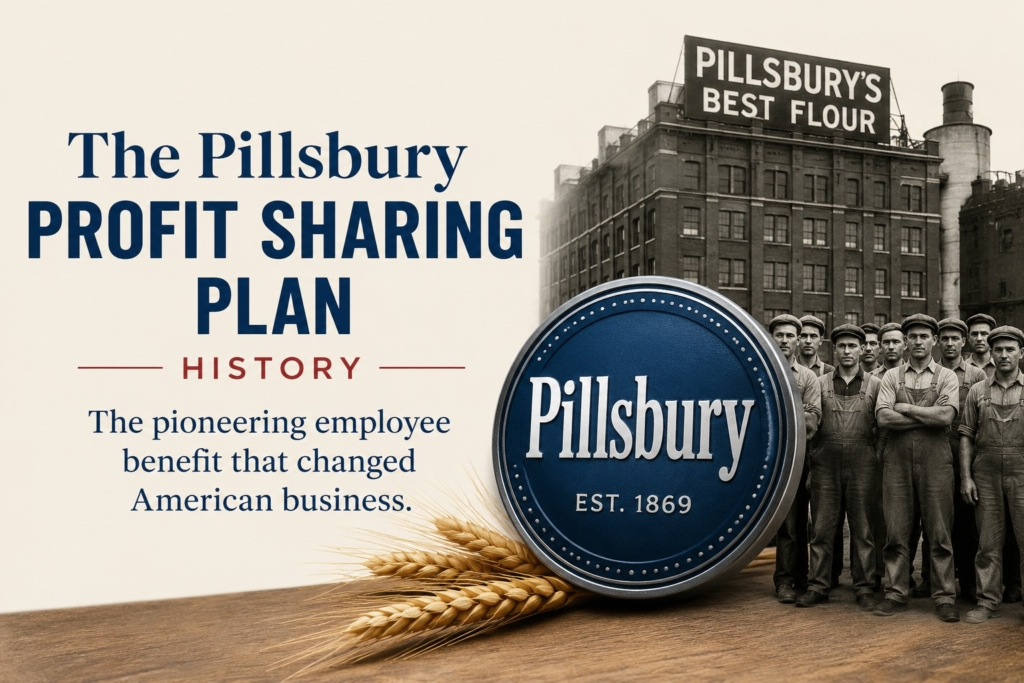
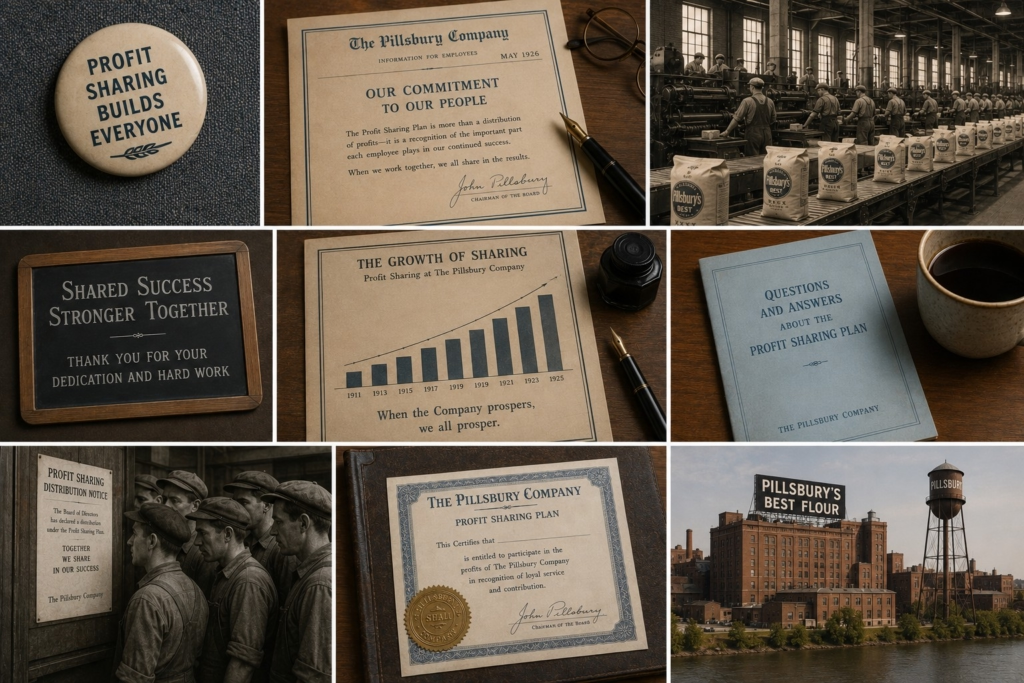
The Pillsbury Profit Sharing Plan, launched in the 1880s, was one of the first broad-based employee profit-sharing programs in the United States. It helped demonstrate that employees who share in company success become more loyal, productive, and invested in the business.
This idea eventually influenced:
- Qualified profit sharing plans
- Pension plans
- ESOPs
- 401(k) plans
- Safe Harbor plans
- Cash Balance plans
For today’s Atlanta-area business owners, the lesson is simple: a well-designed retirement plan can align employee interests with company success while generating substantial tax deductions.
Who Actually Created the Pillsbury Profit Sharing Plan?
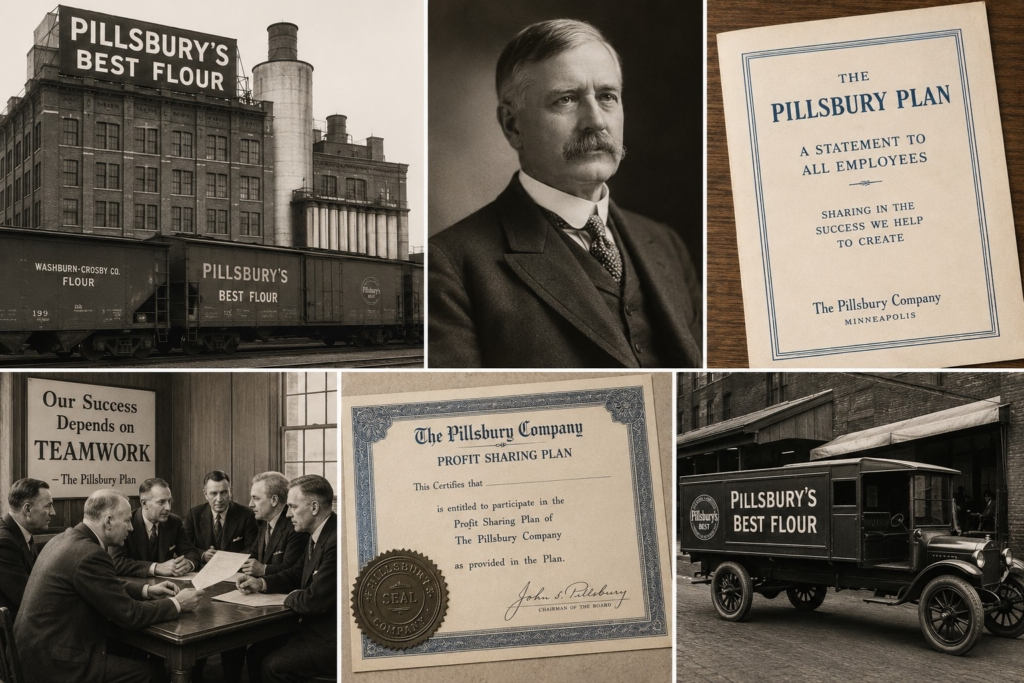
Although John S. Pillsbury was a co-founder of the company, historical accounts credit his nephew, Charles Alfred Pillsbury, with implementing one of the earliest formal profit-sharing programs around 1882. Charles reportedly distributed as much as $25,000 annually to workers based on company performance, and historians note that the company experienced no strikes during his leadership.
That distinction matters because Charles was the operating visionary who transformed a small milling business into one of the world’s largest flour producers.
What Is a Profit Sharing Plan?
A profit sharing plan is a qualified employer-sponsored retirement plan in which the employer makes discretionary contributions to employee accounts.
Unlike a pension, there is no guaranteed future payout.
👍Which retirement plan is best for you? Try our retirement plan finder.
Unlike a 401(k), employees are not required to contribute their own salary.
The employer decides annually:
- Whether to contribute
- How much to contribute
- How contributions will be allocated
The company receives a tax deduction, and employees receive tax-deferred retirement savings.
For current IRS guidance, see the IRS Profit Sharing Plans for Small Businesses.
How Profit Sharing Differs from Popular Retirement Plans
| Plan | Employee Contributions | Employer Contributions | Flexibility | Best For |
|---|---|---|---|---|
| Profit Sharing Plan | No | Discretionary | Very High | Profitable businesses |
| 401(k) | Yes | Optional | High | Broad employee participation |
| Safe Harbor 401(k) | Yes | Required | Moderate | Maximizing owner deferrals |
| SEP IRA | No | Discretionary | High | Solo and micro businesses |
| SIMPLE IRA | Yes | Required | Moderate | Firms with fewer than 100 employees |
| Cash Balance Plan | No | Required actuarially | Lower | Owners seeking large deductions |
Why Charles Pillsbury Introduced Profit Sharing
Charles Pillsbury understood a timeless business truth: employees who feel like partners often act like owners.
His objectives were to:
- Reward loyal employees
- Reduce labor conflict
- Improve productivity
- Retain experienced workers
- Share the company’s success
At the time, this was revolutionary.
Most workers received only wages and had little opportunity to participate in the upside they helped create.
Opposition and Conflicts
Not everyone supported the idea.
Shareholder Concerns
Some investors argued profits should belong exclusively to owners.
Executive Resistance
Managers feared employee expectations would grow over time.
Employee Skepticism
Workers were initially uncertain whether the arrangement would be fair and sustained.
👍Which retirement plan is best for you? Try our retirement plan finder.
Administrative Complexity
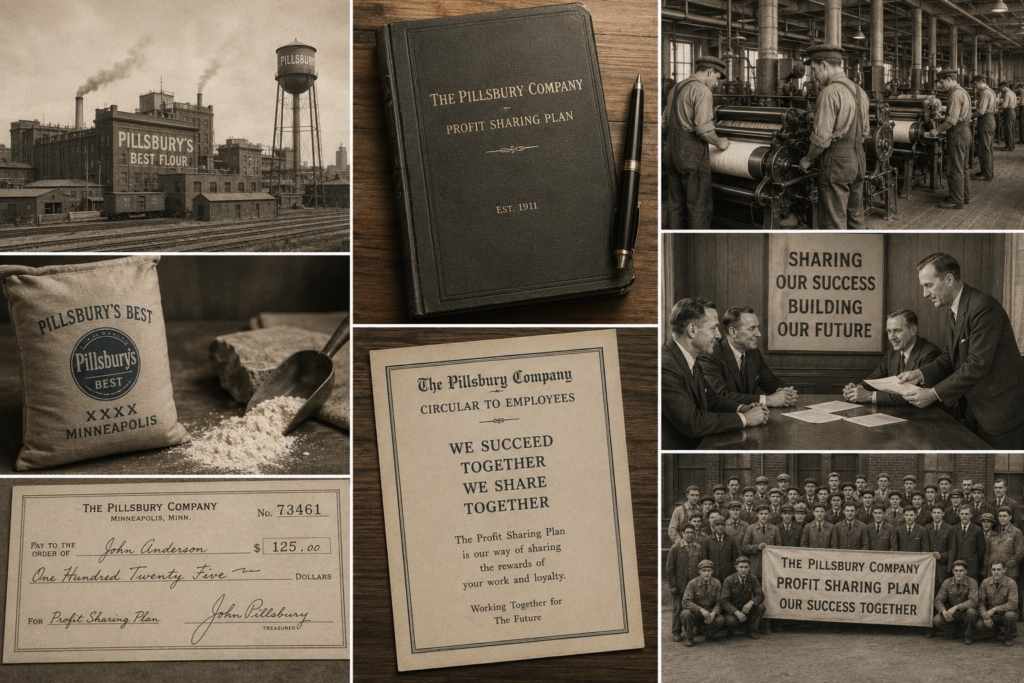
Tracking allocations and communicating benefits was more difficult in the 1880s than it is today.
Did the Plan Work?
By virtually every measure, yes.
Historical reports indicate:
- Employee morale improved.
- Labor disruptions were avoided.
- The company expanded rapidly.
- Pillsbury built a reputation as a progressive employer.
In fact, some historians note that no strikes interrupted the business during Charles Pillsbury’s tenure.
Did Employees Like It?
Evidence suggests employees valued the arrangement because it:
- Supplemented wages
- Created long-term wealth
- Recognized their contribution
- Encouraged loyalty
For many workers, this was their first opportunity to accumulate capital rather than rely solely on wages.
What the Pillsbury Plan Paved the Way For
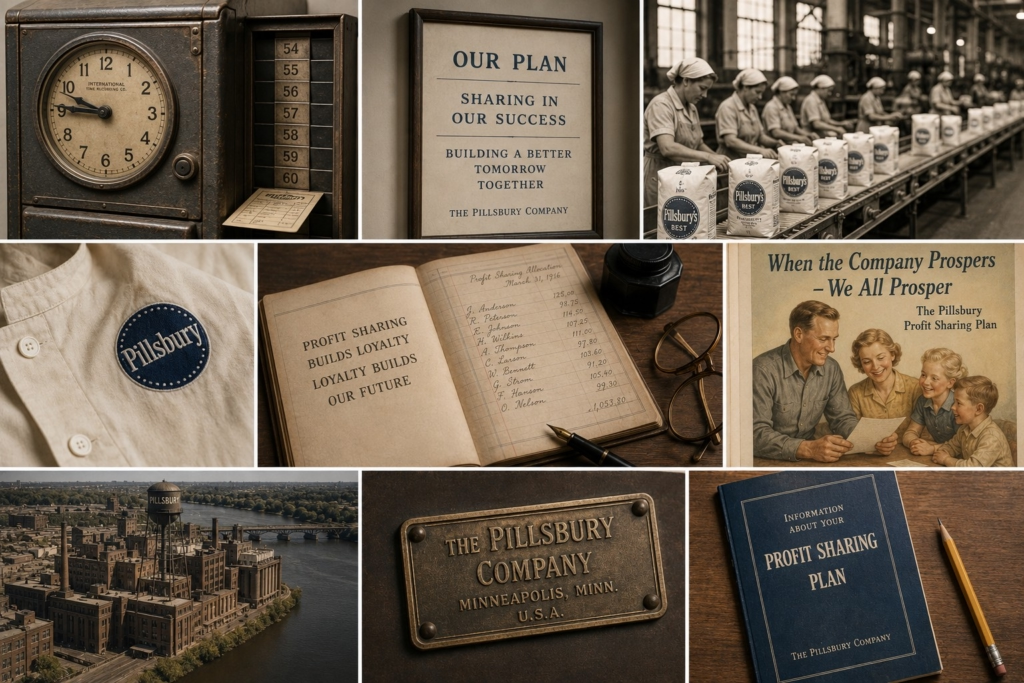
The Pillsbury plan helped normalize the concept that employers could fund retirement wealth on behalf of employees.
That philosophy later evolved into several landmark benefit innovations.
1916: The First Profit-Sharing Pension Plans
Financial institutions and industrial companies began linking profit sharing to formal retirement accounts rather than annual cash bonuses.
1940s–1950s: Qualified Profit Sharing and Pension Plans
The Internal Revenue Code increasingly recognized employer-sponsored retirement plans as tax-advantaged vehicles.
1956: The First ESOP
Louis Kelso created the first Employee Stock Ownership Plan (ESOP), allowing employees to become owners.
1962: Keogh Plans
Named after Representative Eugene Keogh, these plans extended tax-qualified retirement options to self-employed professionals.
1974: ERISA
The Employee Retirement Income Security Act of 1974 established fiduciary rules, vesting standards, and participant protections.
1978: Section 401(k)
Congress added Internal Revenue Code Section 401(k) through the Revenue Act of 1978.
👍Which retirement plan is best for you? Try our retirement plan finder.
1980: Ted Benna Popularizes the 401(k)
Ted Benna recognized that employees could defer salary pre-tax into retirement accounts, helping launch the modern 401(k).
Retirement Plan Innovators Worth Further Study

We focus on the nitty-gritty
so you can relax.
✓ Empowering, game-changing benefit plans
✓ Schedule a consultation
- Charles A. Pillsbury and the first profit-sharing plan.
- Louis Kelso and the invention of the ESOP.
- Eugene Keogh and the Keogh plan.
- Ted Benna and the accidental invention of the 401(k).
- Congress and ERISA’s transformation of retirement security.
- How Cash Balance Plans became a tax strategy for high-income professionals.
Why Profit Sharing Plans Still Matter Today
For Atlanta business owners, profit-sharing plans remain one of the most flexible retirement planning tools available.
Benefits include:
- Discretionary annual contributions
- Tax-deductible funding
- Improved employee retention
- Ability to reward key employees
- Coordination with 401(k)s and Cash Balance Plans
Atlanta Case Study: Professional Services Firm with 10 Employees
An owner in Atlanta earns $900,000 annually and wants to:
- Reduce taxable income
- Maximize retirement savings
- Reward employees
- Improve retention
A combined Safe Harbor 401(k) and profit-sharing plan may allow meaningful contributions for both the owner and staff while creating a substantial tax deduction.
Profit Sharing vs. Year-End Bonuses
| Year-End Bonus | Profit Sharing Plan |
|---|---|
| Taxable immediately | Tax-deferred |
| Subject to payroll taxes | No immediate income tax to employee |
| Often spent | Preserved for retirement |
| Short-term reward | Long-term retention strategy |
Which Businesses Benefit Most?
Profit-sharing plans are especially effective for:
- Medical practices
- Dental offices
- Law firms
- Consulting firms
- Construction companies
- Family-owned businesses
Related Emergent Financial Group Articles
Explore additional resources at Emergent Financial Group Knowledge Base:
Retirement Planning
- Best Retirement Plans for the Self-Employed
- Business Making Over Six Figures? How Cash Balance Plans Can Reduce Taxes Fast
- The 3 Tax Buckets of Retirement Planning
Employee Benefits
- 18 Employee Benefit Examples to Consider Offering in 2026
- Has Your Employee Benefit Plan Become Unaffordable?
Estate Planning
👍Which retirement plan is best for your business? Try our retirement plan finder.
Tools
Suggested External Resources
- IRS Profit Sharing Plans for Small Businesses
- U.S. Department of Labor Retirement Topics
- Britannica: Charles Alfred Pillsbury
Final Thoughts
Charles Pillsbury did more than build a flour empire.
He helped demonstrate a powerful business principle: when employees share in success, companies become stronger.
That principle directly influenced the development of modern retirement plans, including profit-sharing plans, ESOPs, and 401(k)s.
For Atlanta business owners seeking tax-efficient ways to reward employees and build long-term wealth, the same strategy remains remarkably effective today.
Schedule a Retirement Plan Review
Emergent Financial Group helps Atlanta-area business owners design:
- Profit Sharing Plans
- 401(k) Plans
- Safe Harbor 401(k)s
- SEP IRAs
- SIMPLE IRAs
- Cash Balance Plans
Schedule a Meeting with Emergent Financial Group
Call (404) 394-0823 or visit Emergent Financial Group to learn more.

"Helping Businesses Build Better Benefits. Helping Employees Build Better Retirements. RIA in Buckhead. Benefit Planning. Wealth Management. Wills. Trusts. Estate Planning."