HEDGE FUND Strategies PROVES Emergent Financial Group Manages Wealth Differently

How We Design Strategies to Front-Run Rebalancing Flows
Structural Alpha from Predictable Capital Movements
Introduction

Rebalancing flows represent one of the most persistent, rule-based, and forecastable sources of institutional trading activity in global markets. Unlike discretionary alpha, these flows are:
- Non-informational (not driven by new fundamental insights)
- Mechanistic (rules-based mandates, often calendar-driven)
- Sizeable (trillions in AUM tied to fixed allocation frameworks)
For managing directors (MDs) overseeing multi-asset portfolios, hedge funds, or institutional trading desks, the ability to anticipate and position ahead of these flows constitutes a form of structural alpha extraction.
This article explores—at a technical level—how such strategies are designed, modeled, and implemented.
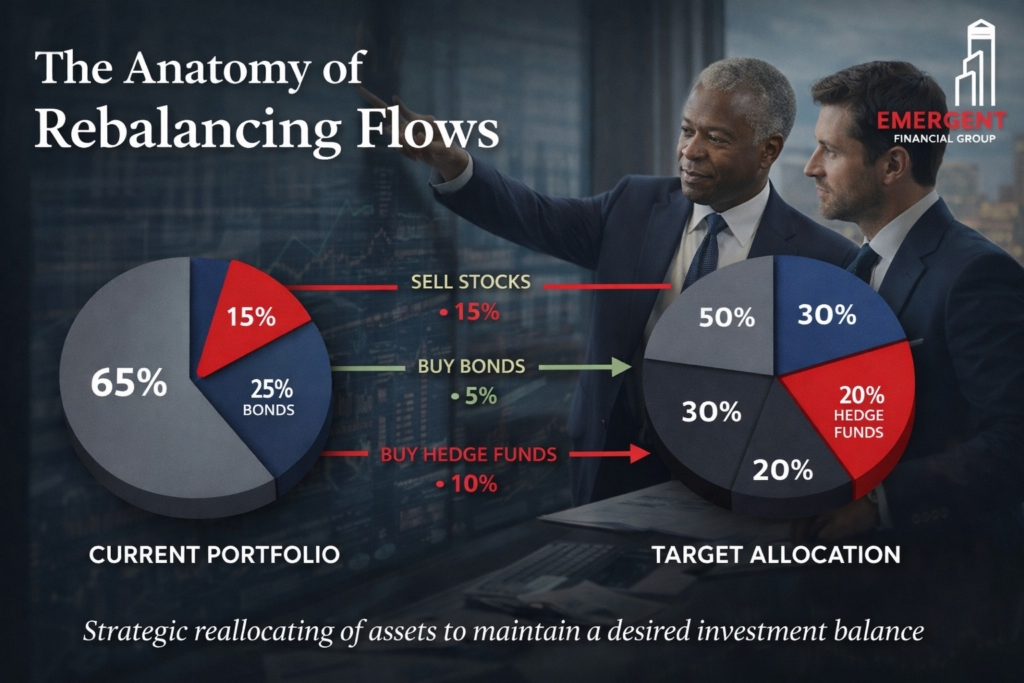
1. The Anatomy of Rebalancing Flows
Rebalancing originates from mandates such as:
- 60/40 portfolios (equity vs fixed income)
- Risk parity funds
- Volatility-targeting strategies
- Target-date funds
- Index funds and ETFs
Core Mechanism
When asset prices move, weights drift:
wi=∑jPj⋅QjPi⋅Qi
If equities outperform bonds:
- Equity weight rises above target
- Funds must sell equities and buy bonds to rebalance
Flow Predictability Drivers
1. Calendar Effects
- Month-end / quarter-end / year-end
- Pension fund rebalancing windows
- Target-date glide path adjustments
2. Threshold Triggers
- Deviation bands (e.g., ±2%)
- Volatility regime shifts (risk parity deleveraging)
3. Public Data Transparency
- ETF holdings
- Index weights
- AUM disclosures
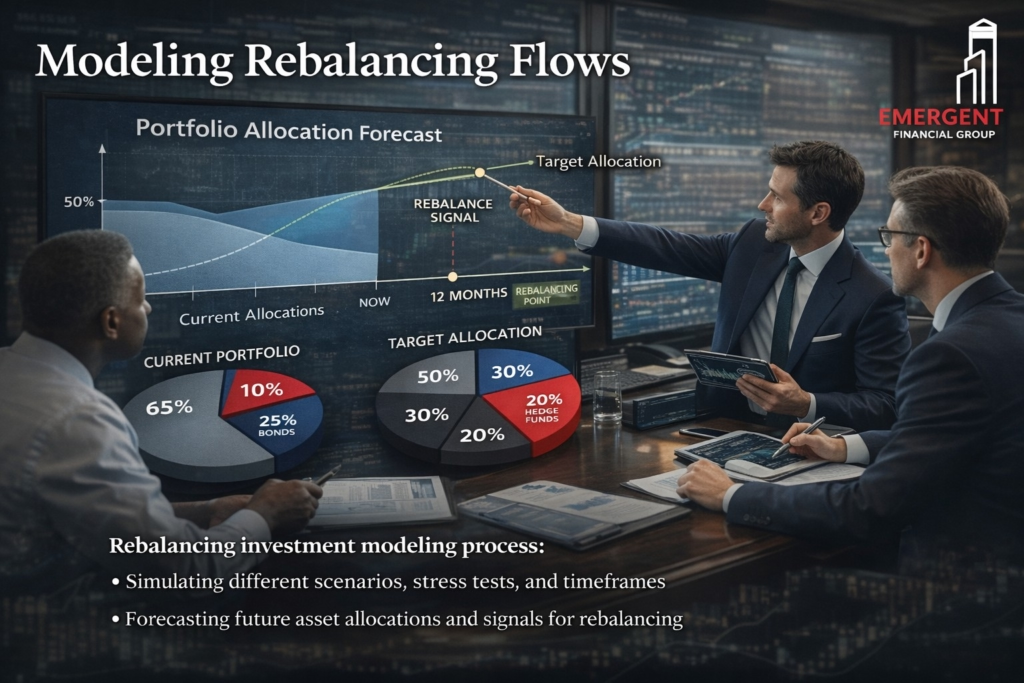
2. Modeling Rebalancing Flows
A. Bottom-Up Flow Estimation
MDs typically begin with:
Expected Flow=AUM×(wtarget−wcurrent)
But real-world modeling is far more complex.
Adjustments Include:
- Derivative overlays (futures vs cash exposure)
- Currency hedging layers
- Liquidity constraints (staggered execution)
B. Factor Decomposition
Flows are decomposed into factor exposures:
This allows MDs to express trades via:
instead of blunt cash trades.
C. Flow Elasticity Modeling
Not all flows move markets equally.
MDs estimate price impact functions:
ΔP=λ⋅Order Sizeα
Where:
- λ = liquidity coefficient
- α ≈ 0.5–1 depending on market depth
This is closely related to Kyle’s Lambda and modern market microstructure theory.
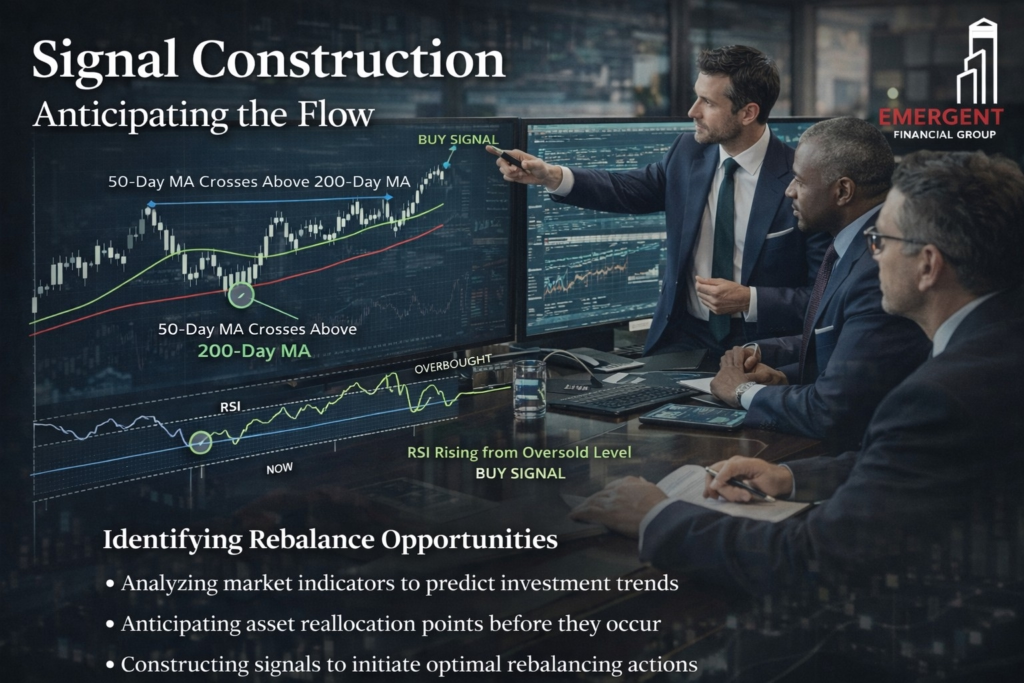
3. Signal Construction: Anticipating the Flow
A. Cross-Asset Signals
Key inputs:
- Equity returns vs bond returns (relative performance)
- Implied volatility (VIX level changes)
- Yield curve shifts
Example:
If equities rally sharply into month-end:
→ Expect systematic equity selling
B. Volatility Targeting Models
Volatility-controlled funds adjust exposure as:
Target Exposure∝Realized VolTarget Vol
Rising volatility:
→ Forces deleveraging (selling risk assets)
MDs track:
- Realized vol (short window vs long window)
- Implied vs realized spreads
- Gamma positioning in options markets
C. CTA (Commodity Trading Advisor) Positioning

Trend-following funds rebalance based on:
MDs reverse-engineer:
This creates predictable forced flows during trend reversals.
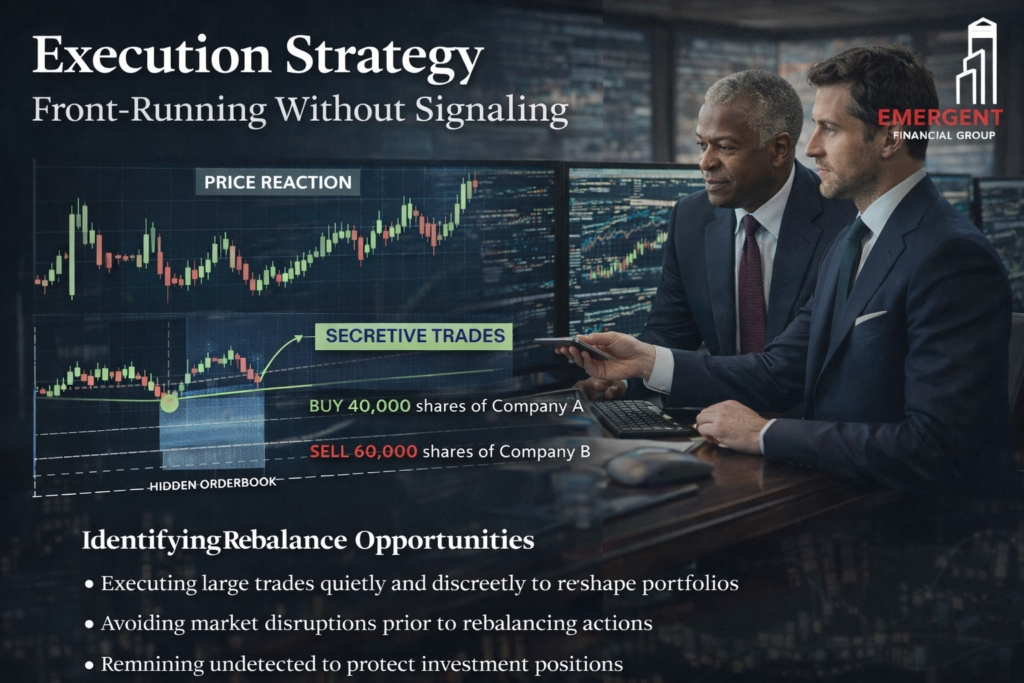
4. Execution Strategy: Front-Running Without Signaling
Front-running here refers to anticipatory positioning, not illegal activity involving non-public information.
A. Timing Layer
MDs optimize entry across:
- T-5 to T-1 (days before rebalance window)
- Intraday liquidity cycles
- Auction imbalances
B. Instrument Selection
Instead of trading underlying assets directly:
- Use futures for beta exposure
- Use options for convex positioning
- Use swaps for balance sheet efficiency
C. Liquidity Layering
Execution is fragmented across:
Goal:
- Minimize footprint
- Avoid signaling intent

5. Portfolio Construction: Embedding the Strategy
A. Alpha vs Beta Separation
Rebalancing front-run strategies are often:
- Low Sharpe individually
- High capacity
- Low correlation to traditional alpha
Thus, they are embedded as:
B. Risk Budgeting
MDs allocate risk via:
Critical risks include:
- Timing error (flows delayed)
- Crowding risk (too many participants)
- Regime shifts (flows reverse unexpectedly)
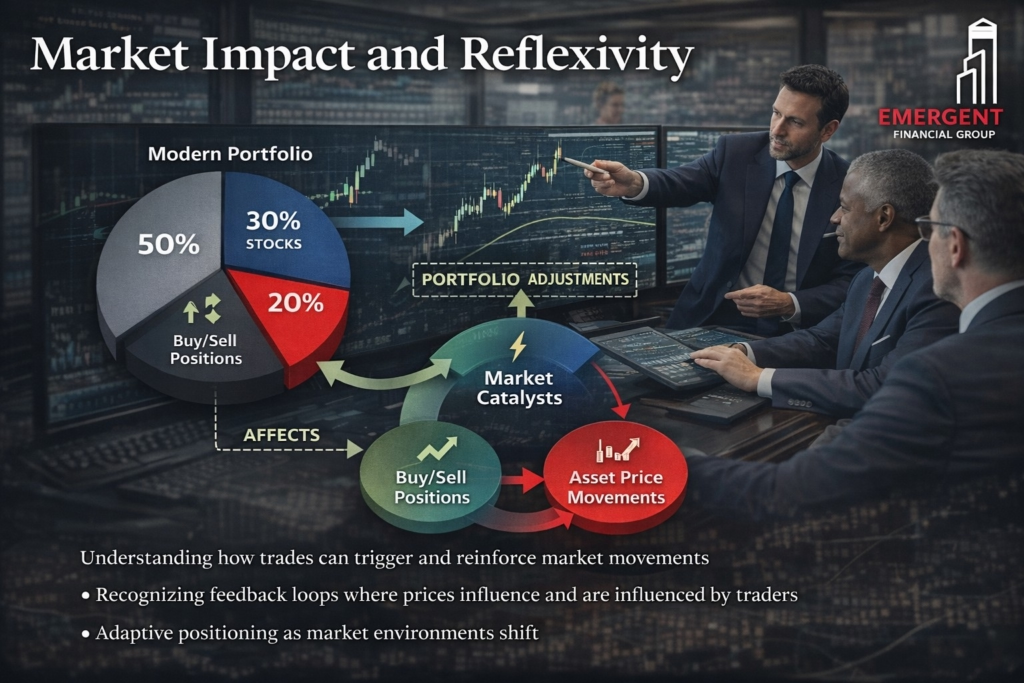
6. Market Impact and Reflexivity
As more participants exploit these flows:
- Signals become crowded
- Execution windows shift earlier
- Alpha decays
This creates a reflexive system:
- Flows become predictable
- Traders front-run flows
- Price moves occur earlier
- Original flows have reduced impact
👍Learn more: What a Currency Reset Could Look Like for Your Investments

7. Advanced Layer: Cross-Market Propagation
Sophisticated MDs extend strategies across:
A. Equity ↔ Fixed Income

We focus on the nitty-gritty
so you can relax.
✓ Empowering, game-changing results
✓ Schedule a consultation
Equity selling → bond buying
→ impacts yield curve
B. FX Markets
Global portfolios rebalance:
- USD vs EUR vs JPY exposures
- Hedging flows create currency pressure
C. Derivatives Feedback Loops
Options dealers hedge:
This amplifies or dampens rebalancing impact.

8. Data Infrastructure and Technology Stack
A. Required Data
- High-frequency price data
- Fund flow estimates
- ETF creations/redemptions
- Options positioning
B. Modeling Stack
- Python / C++ for execution models
- Real-time risk engines
- Machine learning for flow prediction
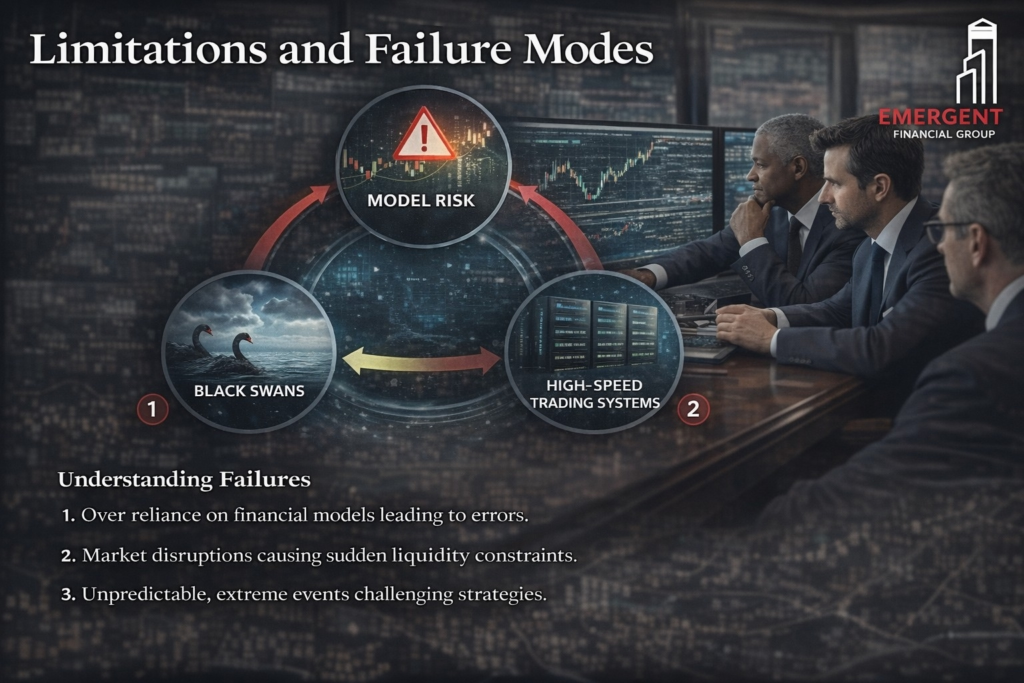
9. Limitations and Failure Modes
Even the most sophisticated strategies face breakdown scenarios:
1. Policy Shocks
Central bank actions override flow dynamics
2. Liquidity Crises
Flows become secondary to forced deleveraging
3. Structural Changes
- Rise of passive investing
- Changes in rebalancing frequency

10. When to Go Deeper
Several concepts in this article warrant standalone exploration due to their depth:
- Market Microstructure & Price Impact Models
- Volatility Targeting and Risk Parity Mechanics
- Options Dealer Hedging (Gamma/Vanna/Charm)
- CTA Signal Reconstruction Techniques
- Cross-Asset Liquidity Transmission
These articles are coming soon.
Key Takeaways
- Rebalancing flows are predictable, structural, and large-scale
- Managing directors convert these flows into systematic trading signals
- Success depends on:
- Accurate flow estimation
- Precise timing
- Low-impact execution
- Alpha is fragile and reflexive, requiring constant adaptation
Final Thoughts
Front-running rebalancing flows is less about predicting markets and more about understanding how capital must move under constraints. At the highest level, this strategy reflects a shift from:
For sophisticated investors, recognizing these dynamics provides insight into why markets move even in the absence of news.
👍For deeper detail, see Why Today’s “Inflation” May Not Actually Be Inflation
Need help getting started?
Explore how Emergent Financial Group partners with families, employees and small business owners for comprehensive wealth management and estate planning.
Helping Atlanta Businesses Build Stronger Financial Futures
If your company is reviewing employee benefits, executive compensation structures, or long-term wealth strategies, the advisors at Emergent Financial Group help Atlanta companies design benefit programs that strengthen employee loyalty and financial security.
Please don’t hesitate to contact us here

"Helping Businesses Build Better Benefits. Helping Employees Build Better Retirements. RIA in Buckhead. Benefit Planning. Wealth Management. Wills. Trusts. Estate Planning."
This is general information only and not financial advice. For personal guidance, please talk to a licensed professional.