Best Retirement Plans for the Self-Employed (2026 Update)

If you’re self-employed, retirement planning isn’t optional—it’s one of the most powerful tax and wealth-building decisions you’ll make.
Unlike traditional employees, you don’t have a built-in employer plan. But that’s actually an advantage: you have access to more flexible, higher-contribution, and more strategic plan designs—if structured correctly.
Below is an updated framework for 2026, along with the best retirement plan options and when to use each.

1. The Biggest Advantage in 2026: Control + Flexibility
Self-employed individuals have the ability to:
- Control how much they contribute
- Choose when to contribute
- Optimize tax deferral vs. Roth strategies
- Layer multiple plan types together
This flexibility matters even more in 2026 as contribution limits continue to rise and tax policy uncertainty remains a factor.
For example:
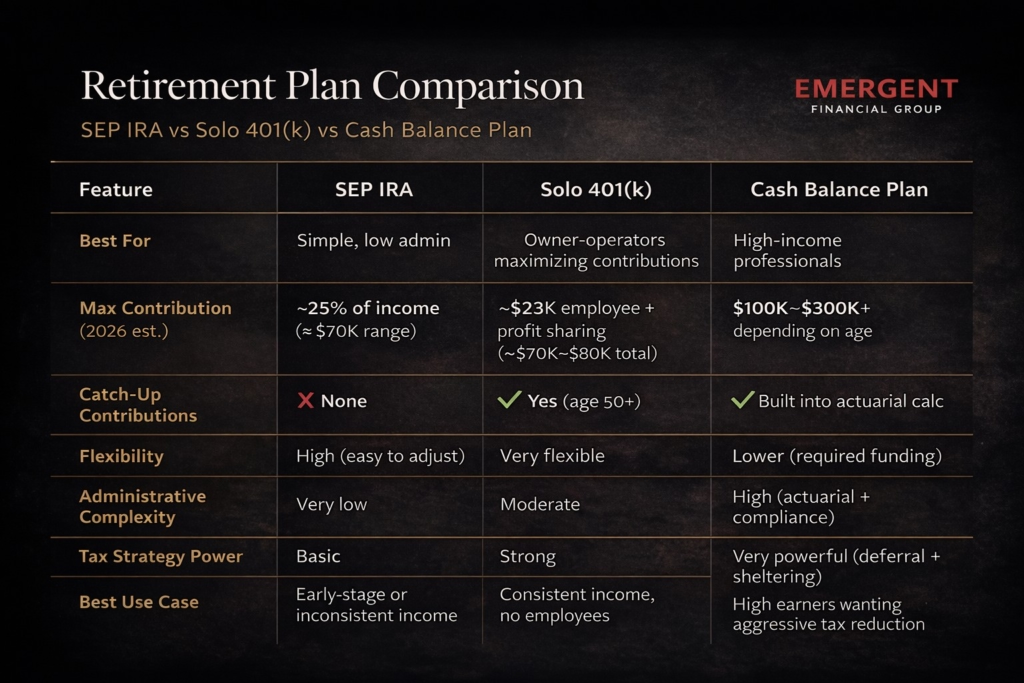
- SEP IRAs allow contributions up to ~25% of income
- Solo 401(k)s allow both employee + employer contributions
- Defined benefit / cash balance plans allow very large tax deferrals
👉 In other words: your retirement plan is also your tax strategy
2. The Core Retirement Plan Options (2026)
Solo 401(k) (Best Overall for Most Owners)
A Solo 401(k) is typically the most powerful starting point.
- Combines employee deferrals + employer profit sharing
- Allows for Roth or pre-tax contributions
- Enables significantly higher contributions than IRAs alone
👉 This is also where advanced strategies begin.
For deeper detail, see:
➡️ https://emergentfingrp.com/knowledge-base/401k-plans/profit-sharing-plans-for-small-businesses-when-they-are-the-smartest-401k-strategy/

401(k) Profit-Sharing Plan (Scaling Contributions)
Once income increases, layering profit-sharing becomes critical.
- Adds employer contributions on top of salary deferrals
- Can significantly increase total contributions
- Works especially well for S-Corp owners managing W-2 income
👉 This is often the first major upgrade from a basic Solo 401(k)
401(k) + Cash Balance Plan (High-Income Strategy)

For high earners, this is where planning becomes institutional-level.
- Combines a 401(k) with a defined benefit (cash balance) plan
- Allows very large tax-deductible contributions
- Particularly effective for:
- Professionals (doctors, consultants, attorneys)
- Business owners earning $300K+
👉 This is one of the most powerful tax deferral strategies available in 2026
SEP IRA (Simple, Flexible, but Limited Strategy)
A SEP IRA is often used early—but has limitations.
- Easy to set up
- Flexible contributions (can skip years)
- Contribution based on income (~25%)
However:
- No employee deferrals
- No Roth option
- Requires equal contributions for employees
👉 Best for simplicity—not optimization
We provide valuable benefit plans
that bring more success in business
SIMPLE IRA (For Small Teams with Simplicity Needs)
A SIMPLE IRA is designed for small employers with employees.
- Lower contribution limits
- Mandatory employer contributions
- Easier administration than a 401(k)
However:
- Less flexibility
- Lower savings potential compared to 401(k)
👉 Best for businesses prioritizing ease over maximum tax strategy
3. 2026 Contribution Reality: Bigger Opportunity Than Ever
Contribution limits continue to increase, making retirement plans more valuable than ever.
- Solo 401(k): high combined contribution potential
- SEP IRA: up to ~$72,000 in 2026 depending on income
- Cash Balance Plans: often $100K–$300K+ annually (age/income dependent)
👉 The key shift:
Retirement plans are no longer just savings vehicles—they are tax engineering tools
4. The Real Strategy: Layering Plans Together
The biggest mistake self-employed individuals make is choosing just one plan.
The most effective strategies layer:
- Solo 401(k)
- Profit-sharing
- Cash balance plan (if income supports it)
This creates:
- Maximum tax deferral
- Better long-term compounding
- Strategic control over income timing
5. How to Choose the Right Plan (Simple Framework)
If you are just starting out:
- Start with a Solo 401(k)
If income is growing:
- Add profit-sharing
If income is high ($300K+):
- Layer in a cash balance plan
If you want simplicity:
- Consider SEP IRA or SIMPLE IRA
6. The Bigger Picture: Retirement + Benefits Strategy
Your retirement plan should not exist in isolation.
It should align with:
- Compensation strategy (W-2 vs distributions)
- Health benefits (ICHRA vs group plans)
- Why Small Business Owners Need Life and Disability Insurance
- Standard Group Health Insurance: What Small Business Owners Need to Know — Even with Zero Employees
- Business Owner Charitable Trust Planning: Strategies for Tax Efficiency and Legacy Building
👉 This is where most business owners leave significant money on the table
Final Thought
The question isn’t:
“Which retirement plan should I choose?”
The real question is:
“How do I structure my retirement plan to reduce taxes and accelerate wealth?”
Because when done correctly, your retirement plan becomes:
- A tax shield
- A wealth accelerator
- A strategic advantage over competitors
Frequently Asked Questions About Employee Benefits
What are the most important employee benefits in 2026?
The most important benefits include health insurance, retirement plans, flexible work options, and financial wellness support.
What benefits do employees value most?
Employees value benefits that improve financial security, flexibility, and overall well-being.
How can small businesses afford employee benefits?
Small businesses can use tax-advantaged strategies, level-funded health plans, and targeted benefits to control costs.
Need help getting started?
Explore how Emergent Financial Group partners with families, employees and small business owners for comprehensive wealth management and estate planning.
Helping Atlanta Businesses Build Stronger Financial Futures
If your company is reviewing employee benefits, executive compensation structures, or long-term wealth strategies, the advisors at Emergent Financial Group help Atlanta companies design benefit programs that strengthen employee loyalty and financial security.
Please don’t hesitate to contact us here

"Helping Businesses Build Better Benefits. Helping Employees Build Better Retirements. RIA in Buckhead. Benefit Planning. Wealth Management. Wills. Trusts. Estate Planning."