The 3 Tax Buckets of Retirement Planning

A Visual Guide for Business Owners, Wealth Clients & Estate Planning Families
A Strategic Framework for Controlling Lifetime Taxes
Retirement planning is not just about how much money you accumulate — it’s about how much you keep after taxes.
Many investors spend decades focused on growing assets but give very little thought to how those assets will be taxed when they begin drawing income. The reality is this: two retirees with the same portfolio balance can experience dramatically different outcomes depending on how their savings are structured across tax categories.
That’s where the “Three Tax Buckets” framework becomes powerful.
Financial planners often organize assets into three distinct tax classifications:
- Tax-Now (Taxable)
- Tax-Later (Tax-Deferred)
- Tax-Free (Tax-Never)
Each bucket is taxed differently — and the way you balance them determines:
- Your tax bracket in retirement
- Whether Social Security benefits become taxable
- How much you pay in Medicare IRMAA surcharges
- How Required Minimum Distributions (RMDs) impact you
- What your heirs ultimately receive
Understanding these buckets gives you flexibility, leverage, and control over your lifetime tax bill.
Ready to invest?
Secure your financial future
with our professional guidance
Let’s examine each in detail.
💸 1. Tax-Now Bucket
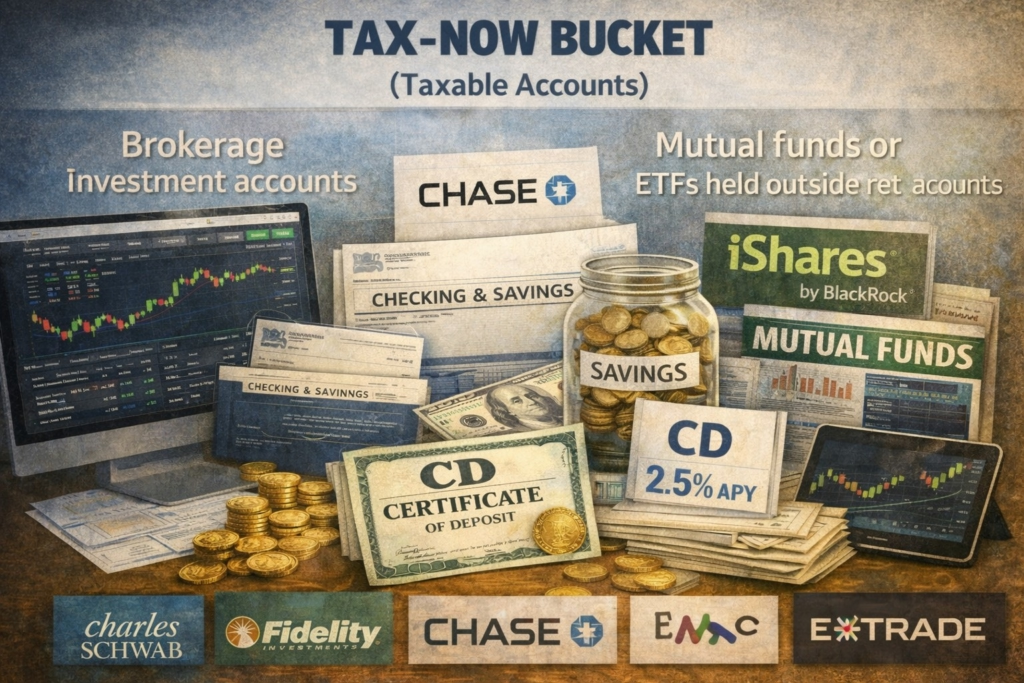
(Taxable or “Taxed Along the Way” Accounts)
What It Is
The Tax-Now bucket includes accounts funded with after-tax dollars where earnings are taxed annually as they occur.
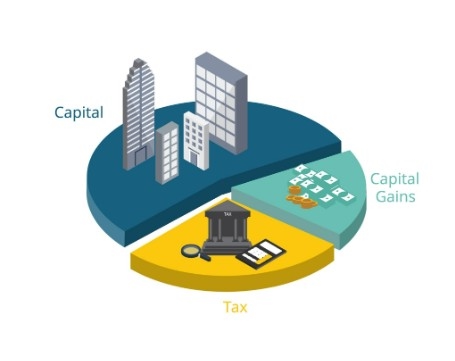
You don’t receive a deduction up front — and you don’t receive tax-free treatment later. Taxes are assessed each year on realized gains, dividends, and interest.
- Brokerage investment accounts
- Individual or joint non-retirement accounts
- Bank savings and checking
- Money market accounts
- Certificates of Deposit (CDs)
- Mutual funds or ETFs held outside retirement accounts
| Bucket | When You Pay Tax | Best For |
|---|---|---|
| Pre-Tax | Later | High earners today |
| Roth | Now | Tax-free retirement income |
| Taxable | Along the way | Flexibility & estate efficiency |
How It’s Taxed
- Interest income → taxed as ordinary income
- Qualified dividends → taxed at capital gains rates
- Capital gains → taxed when investments are sold
- Unrealized gains → not taxed until sold

Why It Matters
While this bucket doesn’t offer tax deferral, it provides:
- Maximum liquidity — funds are accessible anytime
- No early withdrawal penalties
- Capital gains flexibility
- Tax-loss harvesting opportunities
- Step-up in basis at death for heirs
There are no Required Minimum Distributions.
For retirees, this bucket often serves as a “tax management valve.” In years where income needs to stay low (to avoid higher tax brackets or Medicare surcharges), withdrawals from this bucket can be structured carefully.
For estate planning, assets in taxable accounts may receive a step-up in basis, potentially eliminating embedded capital gains for heirs.
📊 2. Tax-Later Bucket
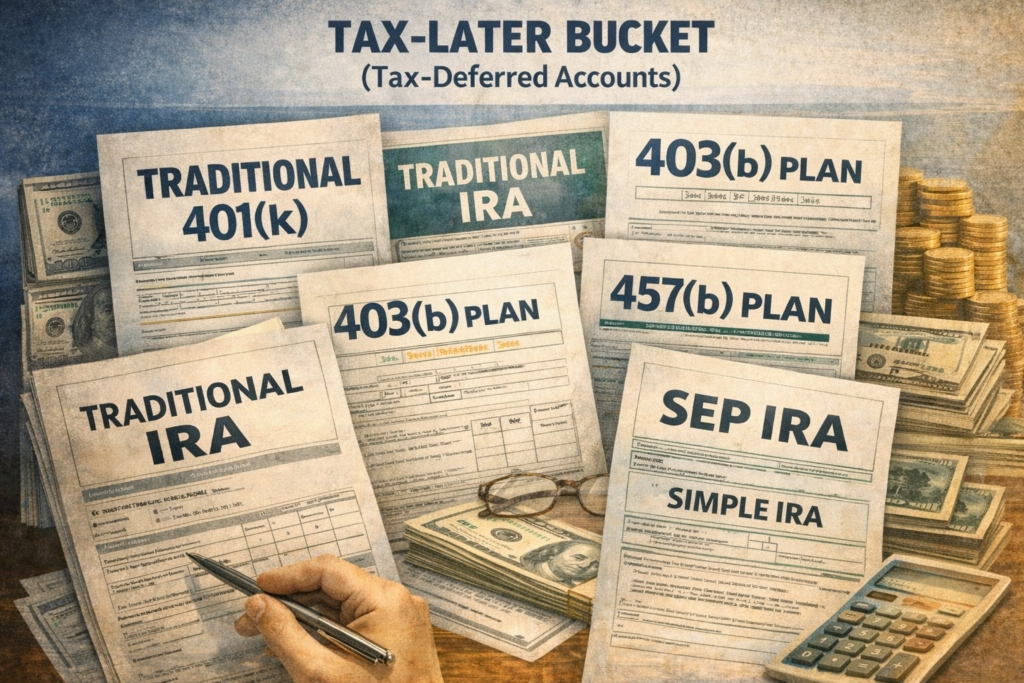
(Tax-Deferred Accounts)
What It Is
This bucket includes accounts funded with pre-tax dollars. Contributions reduce your taxable income today — but taxes are owed when you withdraw funds later.
This is where most Americans accumulate the majority of their retirement savings.
| Bucket | When You Pay Tax | Best For |
|---|---|---|
| Pre-Tax | Later | High earners today |
| Roth | Now | Tax-free retirement income |
| Taxable | Along the way | Flexibility & estate efficiency |
Common Examples

- Traditional 401(k) plans
- Traditional IRAs
- 403(b) plans
- 457(b) plans
- SEP IRAs
- SIMPLE IRAs
How It’s Taxed
- Contributions reduce current taxable income
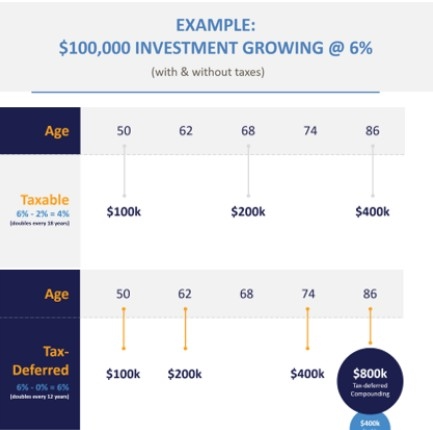
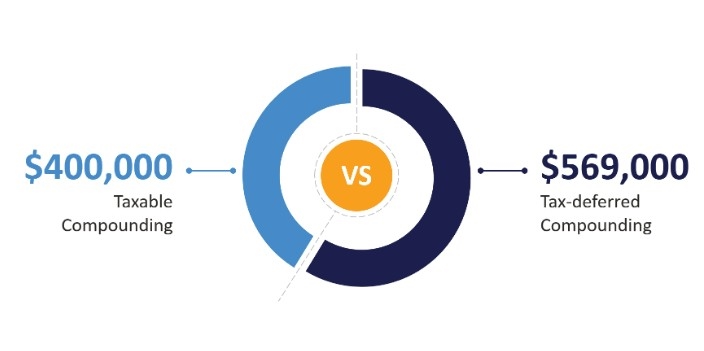
- Growth is tax-deferred
- Withdrawals are taxed as ordinary income
- Required Minimum Distributions (RMDs) typically begin in your 70s
RMDs can force income recognition even if you don’t need the money.
Why It Matters
Tax deferral is powerful — especially during peak earning years.
However, problems can arise if this bucket becomes too large relative to the others:
- Large RMDs can push retirees into higher tax brackets
- Social Security benefits may become taxable
- Medicare premiums may increase due to IRMAA
- Surviving spouses may face higher taxes filing single
- Heirs inherit accounts that must often be distributed within 10 years under current law
In other words, tax deferral is not tax elimination.
Strategic planning may include:
- Roth conversions during low-income years
- Coordinated withdrawal sequencing
- Income smoothing strategies before RMD age
🎯 3. Tax-Free Bucket
(Tax-Never Accounts)
What It Is
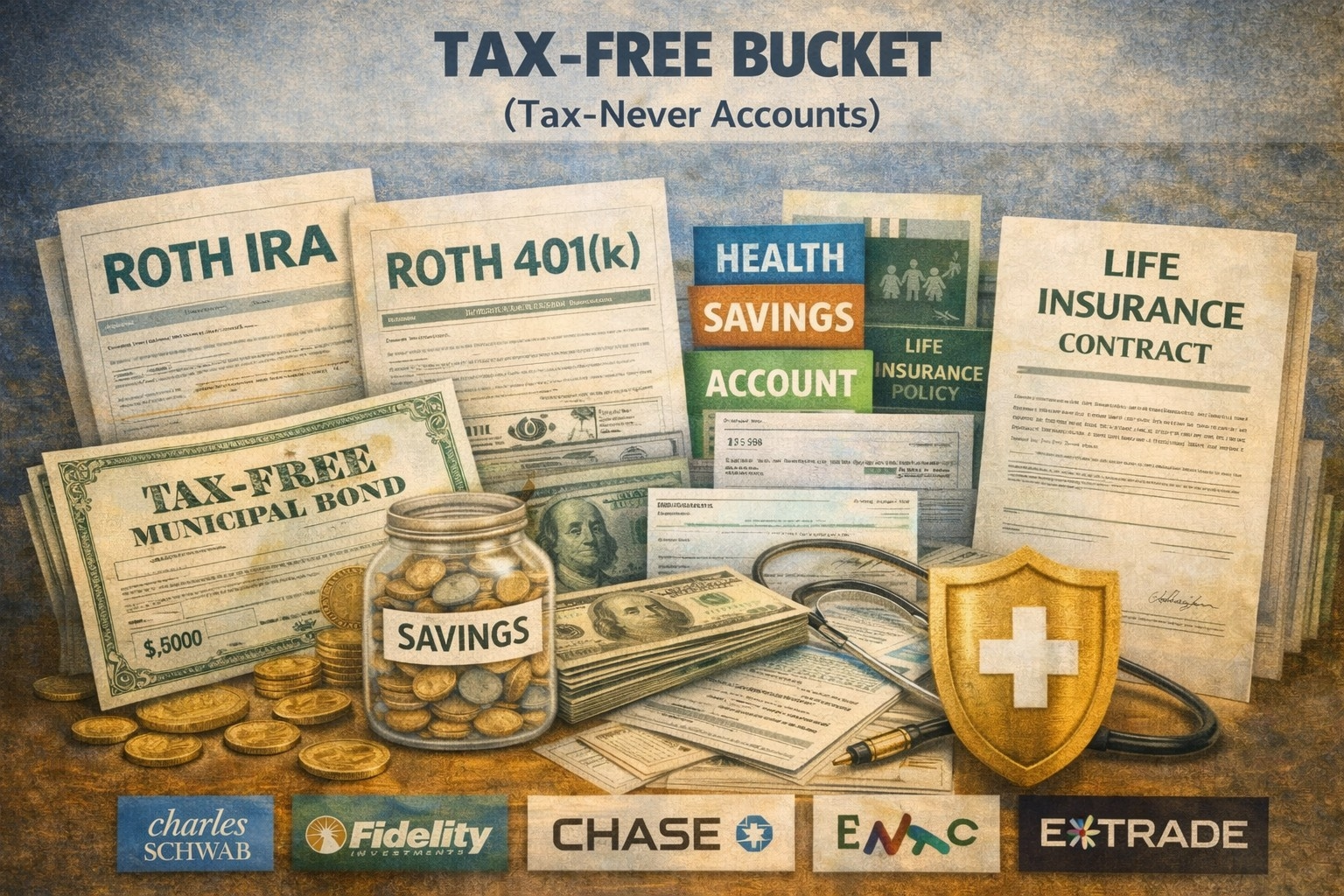
This bucket includes accounts funded with after-tax dollars where qualified growth and withdrawals are tax-free.
It provides the highest level of future tax control.
| Bucket | When You Pay Tax | Best For |
|---|---|---|
| Pre-Tax | Later | High earners today |
| Roth | Now | Tax-free retirement income |
| Taxable | Along the way | Flexibility & estate efficiency |
Common Examples
- Roth IRAs
- Roth 401(k)s
- Health Savings Accounts (HSAs) used properly
- Municipal bonds (interest often federally tax-free)
- Certain properly structured life insurance contracts

How It’s Taxed
- Contributions are made after-tax
- Growth compounds tax-free
- Qualified withdrawals are tax-free
- Roth IRAs have no RMDs for the original owner
Why It Matters
This bucket gives retirees powerful flexibility.
Withdrawals from this category:
- Do not increase taxable income
- Do not increase Social Security taxation
- Do not increase Medicare IRMAA premiums
- Do not trigger additional capital gains taxes
In retirement, this becomes a strategic lever.
If markets decline and you don’t want to sell taxable assets, you can draw from Roth.
If RMDs push income higher one year, you can use tax-free withdrawals the next.
It is often the most valuable bucket for:
- Managing tax brackets
- Estate planning
- Leaving tax-efficient inheritances
- Controlling long-term Medicare costs
🎯 Why Use All Three Buckets?
Spreading savings across all three is known as tax diversification — similar in concept to diversifying across stocks and bonds.
Instead of betting on:
- Today’s tax rates being lower than tomorrow’s
- Or future tax rates remaining stable
- Or Medicare rules staying unchanged
You build flexibility.
With multiple buckets, you can:
- Control your taxable income year-to-year
- Smooth income before and after RMD age
- Reduce lifetime taxes
- Optimize Social Security timing
- Minimize IRMAA exposure
- Improve legacy efficiency
Retirement income then becomes strategic, not reactive.
📈 Withdrawal Sequencing Matters
The order in which you withdraw from these buckets significantly affects long-term tax outcomes.
Common strategic approaches may include:
- Using taxable accounts early to preserve Roth growth
- Performing partial Roth conversions before RMD age
- Coordinating withdrawals to “fill up” lower tax brackets
- Avoiding unnecessary spikes in Modified Adjusted Gross Income (MAGI)
Each year becomes a planning opportunity — not just a distribution decision.
🏁 Conclusion: Retirement Planning Is Tax Planning
The Three Tax Buckets framework is not a gimmick — it’s a practical system for long-term control.
Many retirees discover too late that they saved efficiently, but withdrew inefficiently.
By intentionally building assets across:
- 💸 Tax-Now
- 📊 Tax-Later
- 🎯 Tax-Free
you gain optionality.
Optionality creates leverage.
Leverage creates tax control.
Tax control increases net retirement income.
The goal isn’t to avoid taxes entirely — it’s to manage when and how they occur.
When retirement assets are structured thoughtfully across all three buckets, you are no longer at the mercy of tax law changes, Required Minimum Distributions, or income spikes.
You are in control.
And in retirement planning, control is everything.
Need help getting started? Explore how Emergent Financial Group partners with Retirement Plan providers to bring you flexible, tax-smart options that fit your future.
Please don’t hesitate to contact us here.
"Helping Businesses Build Better Benefits. Helping Employees Build Better Retirements. RIA in Buckhead. Benefit Planning. Wealth Management. Wills. Trusts. Estate Planning."