Why Small Businesses Lose Employees in Q1—and How to Prevent It

A Practical Guide for Atlanta Small Business Owners
For many small businesses in Atlanta, employee turnover feels random. Someone leaves in February or March, and the explanation is vague: “It just wasn’t a good fit.”
But Q1 turnover is rarely random.
In fact, the first quarter is one of the most common times for employees to leave, and benefits—especially how they’re communicated—often play a much bigger role than employers realize.
Why Q1 Is a High-Risk Period for Turnover
Q1 is when expectations collide with reality.
Employees start the year with:
- New benefit elections
- New payroll deductions
- New workloads and goals
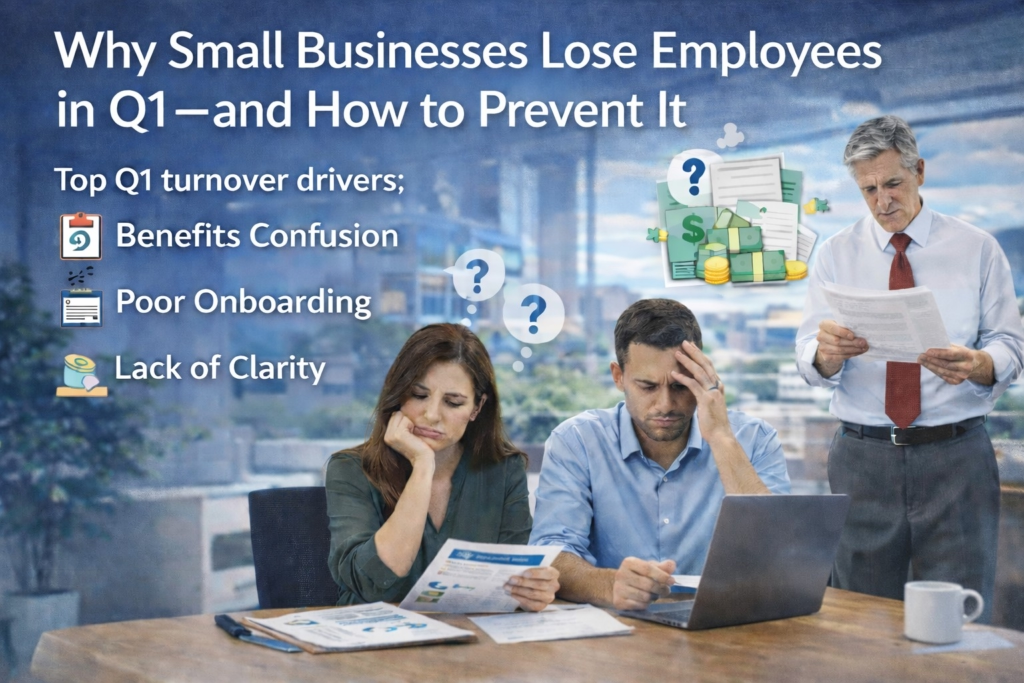
By February, they’re asking themselves a quiet question:
“Is this really worth it?”
When the answer is unclear, people start looking elsewhere.
The Top Q1 Drivers of Employee Turnover
1. Benefits Confusion After Open Enrollment
Open enrollment happens fast. Employees make decisions under pressure, often without fully understanding:
- Deductibles and out-of-pocket costs
- What supplemental benefits actually do
- How to use telehealth, EAPs, or disability coverage
Common Q1 frustration:
Employees see their first few paychecks of the year and notice higher deductions—or unexpected medical bills—without understanding the value behind them.
Example:
An employee chooses a high-deductible health plan in November, then faces an ER visit in January. No one ever explained how supplemental coverage or telehealth could offset those costs.
Result:
The employee feels misled, not supported.
2. Weak Onboarding for New Hires
Many small businesses do a great job hiring—but rush onboarding.
We provide valuable benefit plans
that bring more success in business
Common onboarding gaps include:
- Benefits explained once, then never revisited
- New hires handed PDFs instead of guidance
- No follow-up after the first paycheck or benefits start date
Why this leads to Q1 exits:
New hires who feel confused or unsupported early often disengage quietly—and leave quickly.
3. Employees Don’t Understand Their Total Compensation
Most employees judge compensation by take-home pay, not total value.
If employees don’t understand:
- Employer-paid benefits
- Retirement contributions
- Insurance protections
- Flexibility and work-from-home policies
They undervalue their job—and overvalue outside offers.
Q1 problem:
Raises and bonuses haven’t hit yet, but deductions have. Without context, compensation feels worse than it actually is.
How to Prevent Q1 Turnover (Without Spending More)
The good news: preventing Q1 turnover is often about communication and reinforcement, not increasing pay.
Reinforce Benefits Education in February (Digitally & Remotely)
February is the ideal month to reconnect employees with their benefits—especially in hybrid or remote environments.
Effective digital strategies include:
- Short recorded benefits walkthroughs (5–10 minutes)
- On-demand benefits portals or dashboards
- Quick “Did You Know?” emails explaining one benefit at a time
- Live virtual Q&A sessions employees can join from home
Why this works:
Employees absorb information better once benefits are real—not theoretical.
Clarify How Pay, Benefits, and Flexibility Work Together
Employees need help connecting the dots.
Smart employers explain compensation as a package, not a paycheck.
Examples of what to clarify:
- How employer-paid benefits reduce personal expenses
- How disability or accident coverage protects income
- How retirement contributions add long-term value
- How flexible schedules or remote work reduce commuting and childcare costs
When employees see the whole picture, perceived value increases dramatically.
Address Confusion Early—Before Frustration Builds
The best-performing businesses don’t wait for complaints. They check in proactively.
What this looks like in practice:
- Owners or managers ask: “Does your benefits plan make sense so far?”
- HR follows up after first medical claim or paycheck
- Employees are encouraged to ask questions without feeling uninformed
Real-World Outcome Example
An Atlanta consulting firm noticed recurring benefits questions in January. Leadership scheduled a short virtual benefits refresher in February, walking through real-life scenarios (doctor visit, injury, mental health support).
The result:
- Fewer questions
- Higher benefits usage
- No Q1 resignations for the first time in years
The Big Takeaway for Small Business Owners

Most Q1 turnover isn’t about money. It’s about uncertainty.
Employees leave when:
- Benefits feel confusing
- Compensation feels smaller than expected
- Support feels distant
And they stay when:
- Value is clearly explained
- Questions are welcomed early
- Leadership shows they care beyond the paycheck
Retention doesn’t start with raises—it starts with clarity.
Need help getting started? Explore how Emergent Financial Group partners with Retirement Plan Providers and Strategic Accountants to bring you flexible, tax-smart options tailored to your small business.
Please don’t hesitate to contact us here
Start here:
- Emergent Financial Group Knowledge Base
https://emergentfingrp.com/knowledge-base/

"Helping Businesses Build Better Benefits. Helping Employees Build Better Retirements. RIA in Buckhead. Benefit Planning. Wealth Management. Wills. Trusts. Estate Planning."