What a Currency Reset Could Look Like for Your Investments

Prepared for investors, business owners, and estate planning clients of Emergent Financial Group
The term “currency reset” has gained attention in recent years, especially during periods of high inflation, rising debt, geopolitical tension, and shifting global monetary systems.
But what does a currency reset actually mean in practical terms?
And more importantly:

- How would it affect the U.S. dollar?
- What would it mean for your investments?
- How should small business owners and estate planning families prepare?
This guide provides a grounded, historically informed overview of what currency resets have looked like in the past—and what smart wealth and business planning looks like today.
1. What Is a Currency Reset?
A currency reset refers to a major change in the value or structure of a country’s monetary system. It typically occurs when governments or central banks need to address extreme imbalances such as:
- Excessive national debt
- Persistent inflation or currency devaluation
- Loss of confidence in the currency
- Global realignment of trade and reserve systems
A reset may involve:
- Devaluation (the currency becomes worth less relative to others)
- Revaluation (official exchange rates change)
- New currency issuance
- Debt restructuring
- Monetary system reforms (gold peg changes, reserve shifts)
Currency resets are not always dramatic “overnight events.” More often, they unfold over years through policy adjustments and inflationary effects.
2. How Would a Currency Reset Affect the U.S. Dollar?
The U.S. dollar remains the world’s dominant reserve currency, but it is not immune to structural shifts.
A meaningful dollar reset would likely show up as:
1. Reduced Purchasing Power
If the dollar weakens, imported goods become more expensive, increasing cost pressures on consumers and businesses.
2. Higher Inflation or Sticky Inflation
Currency devaluation often results in inflation that persists even after interest rates rise.
3. Changes in Global Trade and Reserves
Other nations may diversify away from dollar-denominated reserves, weakening demand at the margins.
4. Rising Asset Prices in Nominal Terms
Hard assets often rise in price—not necessarily because they are more valuable, but because the currency buys less.
3. Historic Currency Resets: What Has Happened Before?
Currency resets are not new. History offers several examples where major shifts reshaped markets.
The U.S. Gold Reset (1933–1934)
During the Great Depression:
- The U.S. ended domestic gold convertibility
- Gold was re-priced from $20.67 to $35/oz
- The dollar was effectively devalued
Who benefited?
- Gold-related industries
- Commodity producers
- Export-driven businesses
Bretton Woods Collapse (1971)
In 1971, President Nixon ended the dollar’s convertibility into gold, creating today’s fiat currency system.
The 1970s saw:
- High inflation
- Oil shocks
- Weak dollar cycles
Top-performing sectors included:
- Energy
- Real estate
- Commodities
- Inflation-sensitive equities
Emerging Market Currency Resets (1990s–2000s)
Countries like Argentina, Russia, and Turkey experienced rapid devaluations.
Common winners:
- Hard asset holders
- Exporters
- Business owners with pricing power
- Families with diversified offshore or multi-asset wealth
4. What Sectors Historically Benefit During Currency Resets?
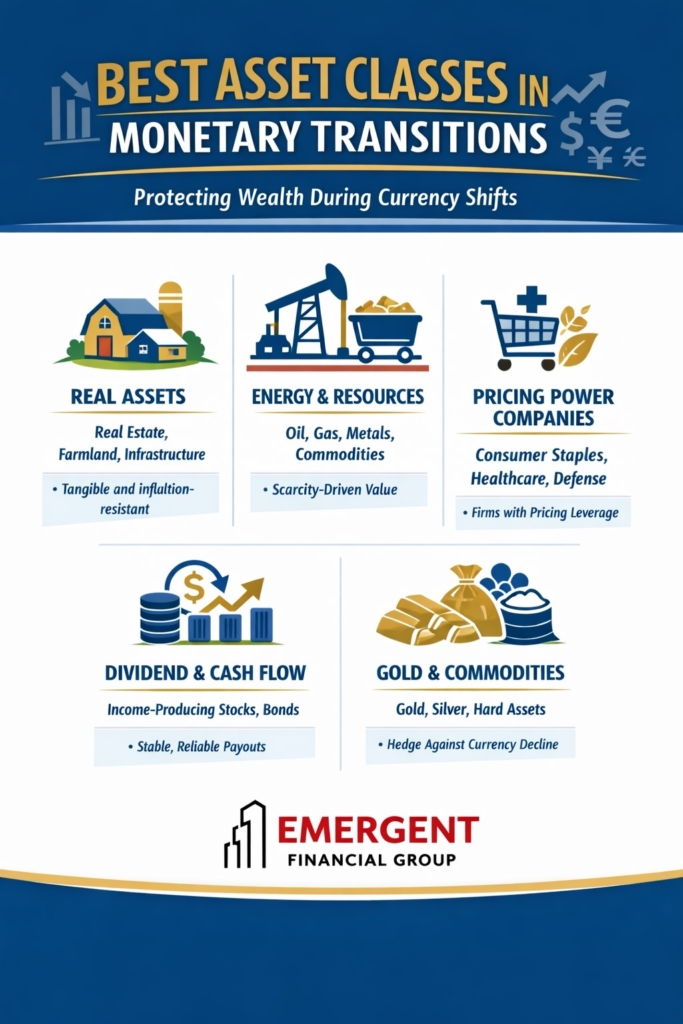
When currencies lose purchasing power, capital tends to rotate toward assets with scarcity, cash flow, or real pricing leverage.
Historically resilient categories include:
Real Assets
- Real estate
- Farmland
- Infrastructure
- Timberland
These assets often rise alongside inflation because they represent tangible productive value.
Energy and Natural Resources
- Oil and gas producers
- Mining and metals
- Industrial materials
In reset environments, resource scarcity becomes more valuable.
Companies With Pricing Power
Firms that can increase prices without losing demand often outperform, including:
- Consumer staples
- Healthcare
- Defense and aerospace
- Utility-like essential services
Dividend and Cash-Flow Businesses
Strong balance sheets, consistent payout structures, and real earnings matter more when currencies weaken.
Gold and Commodity Exposure (Limited Allocation)
Gold has historically served as a non-sovereign store of value during monetary transitions, though it can be volatile and should be managed prudently.
5. What Does a Currency Reset Mean for Small Business Owners?
Small business owners experience currency shifts differently than traditional investors.
A reset environment may bring:
Rising Input Costs
- Materials
- Labor
- Insurance premiums
- Imported goods
Increased Borrowing Costs
If inflation persists, interest rates may remain elevated.
Competitive Advantage for Pricing Businesses
Businesses that can raise prices faster than costs may outperform.
Opportunity for Strategic Tax Planning
Inflation and monetary shifts often lead to:
- New tax law reforms
- Expanded retirement plan usage
- Trust and wealth transfer opportunities

Subscribe to learn
about Wealth Management for free!
Learn how we use estate planning and small business benefits to maximize legacies and tax savings.
6. Best Investment Positioning for Wealth Management Clients
At Emergent Financial Group, we focus on disciplined, diversified preparation—not speculation.
In a currency reset or inflationary regime, portfolio themes often include:
Globally Diversified Equity Exposure
Avoiding overconcentration in one currency or one economy.
Real Asset Allocation (Measured)
Real estate, infrastructure, and resource-linked exposures.
High-Quality Fixed Income Management
Shorter duration and inflation-sensitive positioning when appropriate.
Businesses and Funds With Real Cash Flow
Not purely speculative growth.
Liquidity + Flexibility
Maintaining cash reserves for rebalancing opportunities.
7. Estate Planning Clients: Currency Reset Planning Is Often Trust Planning
For high-net-worth families, currency risk intersects with estate structure.
Key considerations include:
Trust-Based Wealth Transfer While Values Are Depressed
Periods of uncertainty often create planning windows.
Charitable Planning Tools
- Charitable Remainder Trusts (CRTs)
- Donor-Advised Funds (DAFs)
- Family foundations
These structures hedge tax risk while preserving legacy goals.
Wealth Replacement Strategies Using Life Insurance
Insurance can create stable future value even in inflation regimes.
Business Owner Medical Deduction Structures
Family businesses can also be structured to optimize:
- health reimbursement plans
- dependent medical support
- special needs planning
8. What Should You Do Now?
Currency resets are rarely single events. They are usually long transitions.
The best response is not panic—it is planning.
Practical next steps:
✅ Maintain diversified real-return exposure
✅ Avoid overconcentration in cash long-term
✅ Strengthen business resilience and pricing strategy
✅ Review trust and estate structures
✅ Stress-test retirement income plans
✅ Coordinate financial + legal planning proactively
Emergent Financial Group Perspective
At Emergent Financial Group, we help clients prepare for major economic shifts through:
- Comprehensive portfolio management
- Small business retirement and benefit planning
- Advanced estate and trust strategy coordination
- Tax-efficient wealth transfer design
- Partnering with leading estate attorneys and CPAs
Currency regimes change. Wealth strategies must evolve thoughtfully with them.
Want a personalized “Reset-Resilient” Planning Review?
If you are a:
- Retiree or pre-retiree
- High-income business owner
- Family considering trust planning
- Employer managing rising benefit costs
Emergent Financial Group can help you evaluate where your strategy is strong—and where adjustments may be needed.
Need help getting started? Explore how Emergent Financial Group partners with Asset Managers and Strategic Accountants to bring you flexible, tax-smart options tailored to your situation..
Please don’t hesitate to contact us here
"Helping Businesses Build Better Benefits. Helping Employees Build Better Retirements. RIA in Buckhead. Benefit Planning. Wealth Management. Wills. Trusts. Estate Planning."
2 responses to “What a Currency Reset Could Look Like for Your Investments”
It’s really a great and helpful piece of information. I’m happy that you just shared this
helpful information with us. Please keep us up to date like this.
Thanks for sharing.
I appreciate the kind words. We’re working on an interesting article about The Walton Family Trust that you should enjoy. Thank you so much for your interest in our content.