Benefits That Should Be Part of Any Employee Benefits Package

Introduction
In today’s labor market, employee benefits are no longer a “nice to have” — they are a fundamental part of how small businesses attract, retain, and motivate talent. Employees increasingly evaluate job offers not just on salary, but on the overall benefits package: health coverage, retirement savings, paid time off, flexibility, and long-term financial security.
For small businesses, this creates a balancing act. Owners want to remain competitive while keeping costs predictable and administration manageable. The solution isn’t necessarily offering more benefits — it’s offering the right benefits, designed strategically around company size, workforce needs, and long-term goals.
Before diving into employee-count–specific benefit templates, it’s essential to understand the core components that form the foundation of any successful benefits program. These elements represent what employees now expect as standard — and what employers must get right before layering on additional perks or enhancements.
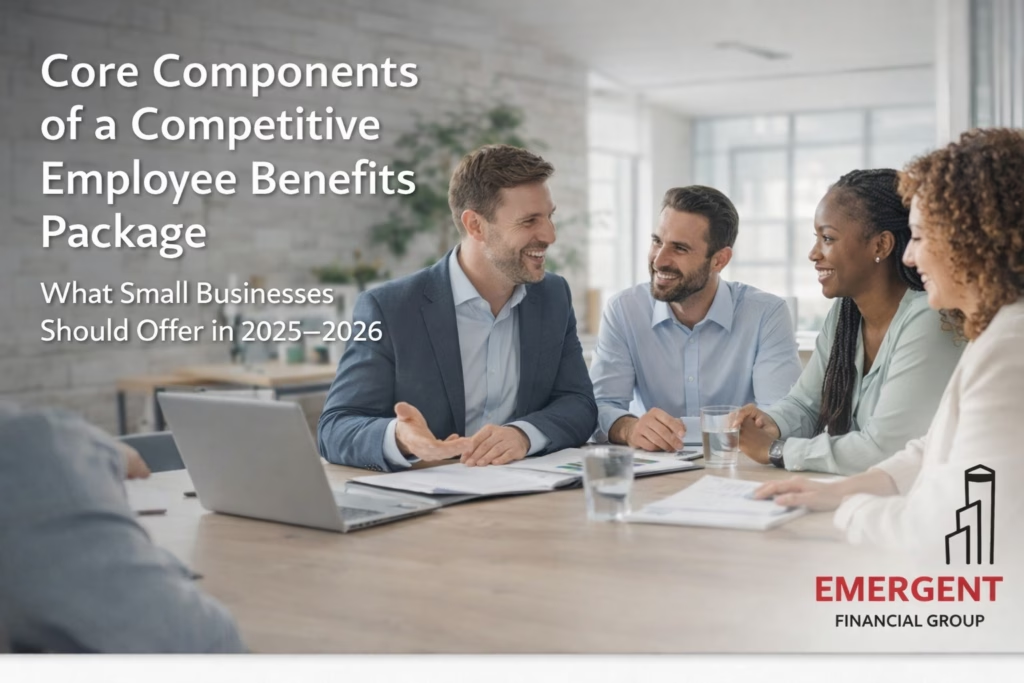
Core Components of a Competitive Benefits Package
1. Health Insurance
Health coverage remains the cornerstone of any benefits offering. This typically includes medical insurance and may also incorporate dental and vision coverage.
For small businesses, health insurance can be structured in multiple ways — from traditional small-group plans to defined-contribution approaches that give employees flexibility while helping employers control costs. Regardless of the structure, access to quality healthcare is often the single most valued benefit employees receive.
2. Retirement Savings Plan
A retirement plan signals long-term commitment to employees’ financial well-being. Options such as a 401(k), SIMPLE IRA, or SEP IRA allow employees to save for the future while offering employers flexibility in cost and administration.
Even modest employer contributions can significantly improve employee participation and retention, especially as workers increasingly prioritize financial security alongside healthcare benefits.
3. Paid Time Off (PTO)
Paid time off is no longer viewed as a perk — it is an expectation. Most competitive benefits packages include vacation time, sick leave, or a flexible PTO bank that combines both.
Thoughtfully designed PTO policies support employee health, productivity, and morale while helping employers manage scheduling and workload expectations more effectively.
4. Ancillary Insurance and Income Protection
Beyond medical coverage, many employers offer additional protection such as life insurance and disability insurance. These benefits help protect employees and their families from unexpected financial hardship due to illness, injury, or loss of income.
We provide valuable benefit plans
that bring more success in business
Ancillary benefits can often be offered at relatively low cost and provide significant peace of mind, making them a high-value addition to any benefits package.
5. Flexibility, Wellness, and Lifestyle Support
Modern benefits extend beyond insurance and retirement plans. Employees increasingly value benefits that support work-life balance and overall well-being, such as:
- Flexible or remote work arrangements
- Wellness programs or stipends
- Mental health support
- Lifestyle or family-support benefits
These offerings don’t always require large budgets, but they can dramatically improve employee satisfaction and engagement when implemented thoughtfully.
These Benefits Form the Foundation
Together, these elements form the foundation of a strong benefits strategy. Once these core components are in place, employers can layer in additional benefits — such as voluntary insurance options, enhanced wellness programs, or customized perks — based on company size, budget, and workforce demographics.
The goal is not to copy what larger employers offer, but to design a benefits package that is intentional, scalable, and aligned with business objectives.
Sample Benefits Package Templates by Company Size
The following benefit-package examples illustrate how these core components are typically applied as businesses grow. Each is designed as a flexible framework — not a rigid checklist — and can be customized based on cost tolerance, risk profile, and employee needs.
1. Starter Package — ~10 Employees
Bootstrapped Startup / Early Small Business
Ideal for very small companies or early-stage businesses that want to offer meaningful benefits without overextending their budget.
- Health coverage through a small-group plan or a defined employer contribution approach
- SIMPLE IRA or SEP IRA for retirement savings
- Basic PTO policy with modest accrual
- Optional life insurance or short-term disability
- Flexible scheduling or remote work options
- Occasional low-cost stipends (wellness, home office, or lifestyle support)
Best for: Startups, very small professional firms, and first-time benefit sponsors.
2. Growth Package — ~25 Employees
Small Business in Growth Phase
At this stage, employers often need a more robust package to compete for talent while maintaining cost discipline.
- Group medical coverage with employer premium contribution
- Dental and vision coverage (employer-paid or voluntary)
- SIMPLE IRA or entry-level 401(k)
- PTO combined with sick or personal days
- Life insurance and short-term disability
- Wellness stipends, flexible hours, or hybrid work arrangements
Best for: Growing small businesses focused on retention and controlled expansion.
3. Established SMB Package — ~50 Employees
Midsize Small Business

As businesses approach 50 employees, benefits become a central part of employer branding and retention strategy.
- Comprehensive group health plan
- 401(k) with employer match
- Dental, vision, life insurance, and disability coverage
- Enhanced PTO and leave policies
- Wellness programs or employee assistance resources
- Voluntary “buy-up” benefits for added customization
Best for: Employers aiming to reduce turnover and support a diverse workforce.
4. Competitive Employer Package — ~100 Employees
Growing Mid-Size Firm
At this level, employers are often competing directly with larger organizations and must offer a highly competitive benefits experience.
- Multiple health plan options with tiered coverage levels
- Employer-matched 401(k) or profit-sharing components
- Robust ancillary and supplemental insurance options
- Generous PTO, parental leave, and flexible work policies
- Comprehensive wellness and work-life balance programs
- Education assistance and lifestyle benefits
Best for: Mid-size firms positioning themselves as employers of choice.
How Emergent Financial Group Adds Value
At Emergent Financial Group, we help small and mid-size businesses move beyond generic benefits packages and toward strategic, customized solutions. Our role includes:
- Benchmarking benefits and costs against comparable employers
- Designing cost-efficient, scalable benefits strategies
- Integrating health, retirement, and voluntary benefits into one cohesive plan
- Helping employers communicate benefits clearly and effectively
- Supporting long-term retention, wellness, and financial stability goals
Conclusion
A strong benefits package doesn’t start with perks — it starts with fundamentals. By building on a solid foundation of health coverage, retirement planning, paid time off, income protection, and flexibility, small businesses can create benefits programs that deliver real value to employees without sacrificing financial control.
As your business grows, these core components provide the structure needed to expand, customize, and compete effectively in an evolving labor market.
If you’re ready to evaluate or redesign your benefits strategy, Emergent Financial Group can help you build a package that works today — and scales for tomorrow.
Employee benefits are no longer an afterthought — they are now a core part of a small business’s identity, culture, and competitive advantage.
The companies winning in 2025–2026 are those that:
- Offer flexible, personalized benefits
- Control costs through smarter plan design
- Provide wellness and lifestyle support
- Communicate benefits clearly and consistently
- Build a strategic long-term benefits roadmap, not just renew plans every year
At Emergent Financial Group, our mission is simple:
Help Georgia small businesses build better benefits, attract better employees, and create better financial outcomes — for both owners and their teams.
A Benefits Package for Small Business is Worth It
Ready to stop guessing and start offering benefits your employees actually care about?
Schedule a free strategy call and let Emergent Financial Group show you how to build a high-impact, budget-friendly benefit plans for your small business.
Need help getting started?
Explore how Emergent Financial Group partners with Families and Small Business Owners for comprehensive Benefit and Estate Planning.
Please don’t hesitate to contact us here
"Helping Businesses Build Better Benefits. Helping Employees Build Better Retirements. RIA in Buckhead. Benefit Planning. Wealth Management. Wills. Trusts. Estate Planning."