Qualified v. Non Qualified Retirement Plans

When you read about different types of retirement plans, you are sure to run across the terms “nonqualified” and “qualified.” These words have numerous implications on the way that these plans are run and both current and future taxation. As an employee, it is crucial that you understand how your retirement plan’s structure will affect your investments in the future and the differences between qualified vs. nonqualified retirement plans.

What Is a Qualified Retirement Plan?
The Employee Retirement Income Security Act (ERISA) governs qualified plans.
Pros of Qualified Retirement Plans
Employers often favor qualified plans, as they provide beneficial tax breaks to the employer and the individual employees. These benefits include:
- Pre-tax contributions: Contributions to qualified plans are made directly from an employee’s paycheck and are made pre-tax.
- Tax-deferred growth: Earnings accumulate on a tax-deferred basis, meaning that no taxes are paid until you begin to withdraw funds from the account.
Cons of Qualified Retirement Plans
There are also some disadvantages of qualified retirement plans to be aware of, such as:
- Restrictions: There are numerous restrictions and requirements for these plans, such as limited investments, filing requirements, nondiscrimination, and other measures making them somewhat expensive to maintain.
- Taxes and penalties: If distributions are made from the account for a nonqualified expense before the employee reaches a specified age, there are taxes and penalties. Currently, this age limit is 59 and a half.
Examples of Qualified Retirement Plans

We focus on the nitty-gritty
so you can relax.
✓ Empowering, game-changing conferences
✓ Schedule a consultation
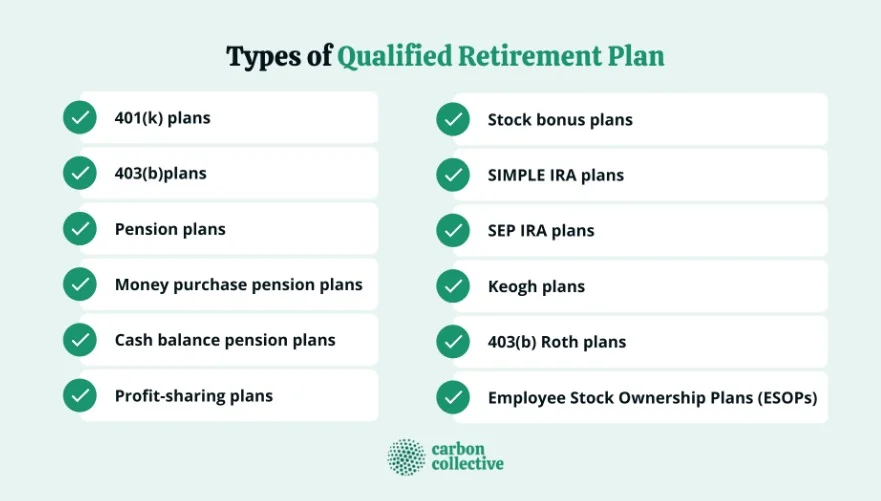
Examples of qualified retirement plans include retirement plans, such as:
- Keogh plans
- 401(k) plans
- 403(b) plans
- Pension plans
- Profit-sharing plans
- Simplified employee pension plans (SEPs)
What Are Nonqualified Retirement Plans?
Nonqualified plans are retirement plans offered by employers that ERISA does not govern.
Note: If you would like to upload a census for a free quote. You can use your own census template, so long as it includes the required fields. Or, you can download our census form directly here. Please upload your census via the design request submission page and we’ll get back to you in 5-7 business days!
Pros of Nonqualified Retirement Plans
There are a few advantages of nonqualified retirement plans that may appeal to you, such as:
- Designed for executives: Since these plans are exempt from the discriminatory and top-heavy testing in qualified plans, they are often designed for executives whose needs are not entirely met by qualified plans.
- Defer taxation: Nonqualified retirement plans may sometimes allow the employee to defer taxation until retirement when they access the funds in their plan.
- Tax-deferred growth: The amount invested into a nonqualified plan can grow tax-deferred until it is accessed in retirement.
We’re numbers-focused
so you can focus on growing your business.
We deliver customized benefit plans that perfectly align your financial goals and employee benefits. Benefit from our expertise for impressive results.
✓ Efficiency and profitability
✓ 1,000+ successful businesses
Cons of Nonqualified Retirement Plans
There are also some disadvantages of nonqualified retirement plans that you may want to consider, such as:
- Lack of tax benefits for the employer: While a qualified retirement plan may offer tax advantages to both the employee and the employer, nonqualified retirement plans aren’t deductible for employers.
- Taxable contributions: In some cases, employees may need to pay taxes right away on their contributions to a nonqualified retirement plan.
- Limited eligibility and availability: Nonqualified retirement plans are often available only to certain employees, particularly executives and highly compensated employees.
Examples of Nonqualified Retirement Plans
Unlike qualified retirement plans, a nonqualified retirement plan doesn’t have set features that you are required to include. There are some broad categories of nonqualified agreements, however, such as:
- Bonus deferral plan: This type of nonqualified retirement plan enables employees to delay bonus receipts.
- Excess benefit plan: This type of nonqualified retirement plan provides benefits to employees limited by IRS restrictions regarding retirement plan benefits and contributions. An excess benefit plan is sometimes referred to as a Section 415 nonqualified plan because its limitations come from Section 415 of the IRC.
- Salary reduction arrangement: This type of nonqualified retirement plan lets an employee delay receipt of income.
- Supplemental executive retirement plan (SERP): This type of nonqualified retirement plan is also referred to as a top-hat plan. This plan is intended to benefit a specific group of employees. Typically, this group of employees is management or executives.
Examples of nonqualified plans within these broad categories include:
- Group carve-out plans
- Executive bonus plans
- Deferred compensation plans
- Split-dollar life insurance plans
- Individual retirement accounts (IRAs) with the exception of SEPs
Qualified and Nonqualified Retirement Plan FAQ
Below, we answer some frequently asked questions about which retirement plans are qualified or nonqualified.
1. Is a 401(k) Plan Qualified or Nonqualified?
A 401(k) plan is considered a qualified retirement plan. If your company offers employees a 401(k), you may get a tax break by contributing a percentage on your employees’ behalf.
2. Is a Traditional IRA Qualified or Nonqualified?
Traditional individual retirement accounts (IRAs) are considered nonqualified retirement plans. This is because these plans are not created by employers. The exception to this rule is if you offer your employees a SEP IRA option.
3. Is a Roth IRA Qualified or Nonqualified?
Similar to a traditional IRA, a Roth IRA is a nonqualified retirement plan, as employers do not offer it to employees. For many taxpayers, however, an IRA can offer similar tax benefits to a qualified plan.
4. Are Pensions Considered Qualified or Nonqualified?
Most pension plans are considered qualified retirement plans, including SEP plans and salary reduction simplified employee pension (SARSEP) plans.
Please don’t hesitate to contact us here.

"Helping Businesses Build Better Benefits. Helping Employees Build Better Retirements. RIA in Buckhead. Benefit Planning. Wealth Management. Wills. Trusts. Estate Planning."